
Nepal Hospital Treats Flood Victims With Lifeline Funded by Express Readers

At Jibjibe Rural Hospital, a modest light-yellow building perched on a hilltop in Nepal’s Rasuwa district.
The corridors are crowded with local residents seeking routine medical care. Some have come for their monthly vaccines, while others wait to have injuries or dental problems treated.
But since the devastating flash floods that struck the region late last month, the rural health centre has taken on a far more critical role — treating survivors and providing psychological support to communities traumatised by the disaster.
Rasuwa, located along Nepal’s border with China, was among the areas worst affected by the floods. The hospital, which normally serves as the first point of care for everyday illnesses, vaccinations, routine check-ups and minor injuries, has seen a sharp rise in patients since the disaster.
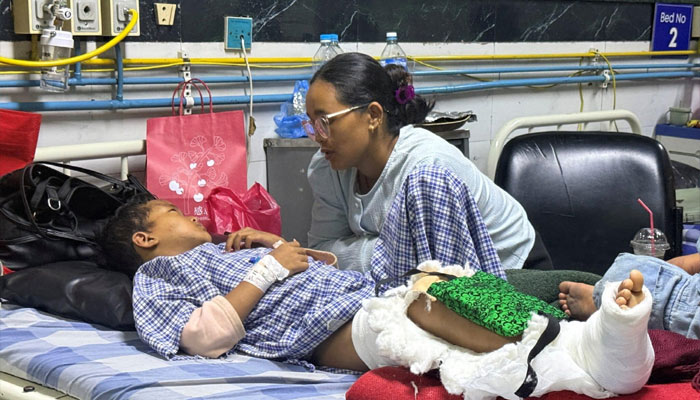
“On the day of the floods last month, we received 10 patients who were injured due to the flood. They were suffering from bone fractures, head injuries and collection of blood in lung cavities,” said Dr Nirajan Bhatta, Medical Superintendent of Jibjibe Rural Hospital.
Five patients were treated at the hospital, while the others were referred to the district headquarters in Dhunche. Those in critical condition were later airlifted by helicopter to Kathmandu.
Before the floods, the hospital typically saw 80-100 patients a day. That number has now increased to 100-130.
Dr Bhatta said many of the new patients are dealing not only with physical injuries but also with trauma and acute stress following the disaster.
“Just yesterday, we got a patient who was complaining of severe pain and discomfort. However, when I checked her vitals, everything was normal,” he said. Doctors later learned that her father had died in the floods and that she had barely eaten in the days afterward. “This is a clear case of acute stress,” Bhatta said.
The hospital’s expanded role is reminiscent of the aftermath of Nepal’s devastating April 2015 earthquake, when readers of The Indian Express responded to an appeal for aid through the newspaper’s Citizens’ Relief Fund. Contributions came from schoolchildren, companies and retired Army personnel, helping raise funds for essential medical equipment.
The donations were used to purchase equipment worth Nepal Rs 1.2 crore for hospitals in Sindhupalchok, Rasuwa and Nuwakot. The supplies included X-ray machines, infant radiant warmers, operation theatre tables and surgical equipment.
At Jibjibe, that support has continued to make a difference. The centre currently has a minor operation theatre, an X-ray machine, three emergency beds, two observation beds, an OPD room, a dental OPD, a delivery room and a laboratory.
The facility is also being upgraded into a larger hospital with 15 operating beds. The new building is nearly complete and is expected to be handed over within a week, said Harikrishan Debkota, chairman of the hospital’s management committee.
“The donations by the Express helped the centre a lot. With surgery equipment and OT tables here in Jibjibe, people did not have to go to Dhunche or Kathmandu, over 90 km away, for every minor procedure,” Debkota said.
Comments are closed.