
BRICS Declaration Breakthrough At 4 AM: How India Bridged Differences Between Iran, UAE, Russia And China

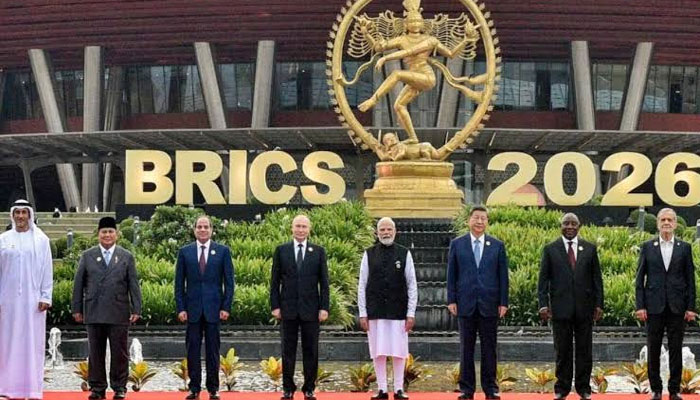
India’s adoption of the New Delhi Declaration at the BRICS Summit came after an intense diplomatic push that continued into the early hours of Saturday.
With negotiations reportedly stretching until around 4 am as New Delhi worked to bridge deep differences among member states. The challenge was particularly difficult because the expanded BRICS grouping brings together countries with competing interests on some of the world’s most sensitive conflicts.
Iran and the UAE had sharply different positions on the West Asia conflict. Saudi Arabia had its own regional calculations, while Russia remained cautious about language that could have implications for the Ukraine war. China, meanwhile, wanted the declaration to reflect its broader vision of a stronger Global South and a more influential multilateral order.
Despite those differences, all members ultimately agreed to the document.
Rather than assigning blame for the West Asia conflict, the final declaration calls for “maximum restraint”, respect for sovereignty and territorial integrity, protection of civilians and a return to “dialogue, consultation and diplomacy”.
India’s Biggest Diplomatic Challenge
The most difficult negotiations reportedly centred on West Asia, particularly the positions of Iran and the UAE.
Iran wanted the declaration to acknowledge what Tehran described as an attack on its territory and a violation of the UN Charter. The UAE, on the other hand, wanted recognition of Iranian attacks on its sovereignty and territory.
For India, which was chairing BRICS, directly endorsing either position could have jeopardised consensus.
A source familiar with the negotiations told The New Indian Express that Iran did not want its position reduced to a broad or generic formulation. India therefore faced the task of finding language that neither Tehran nor Abu Dhabi would consider unacceptable.
New Delhi ultimately shifted the focus from assigning responsibility to principles that both sides could support.
The declaration states that BRICS members, while “recalling our respective national positions”, called for maximum restraint and urged countries to avoid actions that could further escalate tensions.
That wording proved crucial.
By acknowledging that members retained their own national positions, India created room for Iran and the UAE to support a common BRICS statement without having to abandon their individual narratives.
Why The Final Wording Mattered
The final text deliberately emphasised sovereignty, territorial integrity, civilian protection, de-escalation and diplomacy rather than directly assigning blame to countries involved in the conflict.
It called for efforts through dialogue and diplomacy towards a long-term understanding capable of promoting peace and stability in West Asia.
The declaration also highlighted the importance of protecting global trade, supply chains and energy flows—issues that have become increasingly important amid instability in the region.
Former Indian ambassador to the UAE Sunjay Sudhir told Reuters that India had succeeded in keeping difficult conversations alive and creating space for countries with sharply different positions to continue engaging.
That approach was central to New Delhi’s strategy: the objective was not necessarily to make members agree on the conflict itself, but to make agreement on a common diplomatic language possible.
Iran-UAE Meeting Added Another Layer
India’s efforts were accompanied by a significant meeting on the sidelines of the summit.
Iranian President Masoud Pezeshkian met Abu Dhabi Crown Prince Sheikh Khaled bin Mohamed bin Zayed Al Nahyan in New Delhi, providing a direct channel between two countries with competing interests in the regional crisis.
The engagement was significant as Iran and Gulf states have been attempting to manage the wider fallout from the conflict, including concerns over trade, regional security and vital maritime routes.
For India, such direct engagement could only help the broader consensus-building process.
New Delhi did not need Tehran and Abu Dhabi to adopt identical positions. Instead, it needed to ensure that their differences did not prevent both from signing the same document.
Russia Had Its Own Red Lines
West Asia was not the only sensitive issue on the negotiating table.
Russia was reportedly uncomfortable with language that could be interpreted in the context of the Ukraine conflict. One notable feature of the New Delhi Declaration was therefore the absence of a direct Ukraine-related paragraph of the kind seen in some earlier BRICS documents.
For Moscow, avoiding language that could be interpreted as criticism was important.
For India, keeping the Ukraine conflict from dominating the summit declaration also helped preserve the document’s wider focus.
Once again, the negotiators relied on broad principles such as sovereignty, territorial integrity, peaceful settlement of disputes and diplomacy without explicitly applying them to a particular conflict.
China’s Global South Priorities
China was not seen as the principal hurdle in the West Asia negotiations, but Beijing had significant priorities for the final declaration.
Chinese President Xi Jinping has repeatedly advocated a greater role for developing countries and multilateral institutions in global affairs. Those themes featured prominently in the New Delhi Declaration.
The document called for greater representation of developing countries in global governance, reform of multilateral institutions and deeper cooperation among Global South nations.
It also expressed concern over unilateral trade restrictions, tariffs and protectionist policies.
That gave China substantial alignment with the declaration while allowing India to avoid turning BRICS into an explicitly anti-US platform.
A similar balancing act was visible in the discussion of tariffs. The declaration criticised unilateral and protectionist trade measures without directly naming US President Donald Trump.
For New Delhi, that distinction mattered as it sought to balance its relationships with China and Russia while avoiding unnecessary escalation with Washington.
The 4 AM Breakthrough Was Months In The Making
The final breakthrough was not the product of a single overnight negotiation.
India had already struggled to build consensus within BRICS on West Asia earlier in the year. According to The Indian Express, a BRICS meeting in April failed to produce agreement on the conflict, forcing India to issue a Chair’s Summary instead of a joint statement.
Differences remained during the May foreign ministers’ meeting as well.
The September agreement was therefore the culmination of months of diplomatic work.
Indian negotiators spent considerable time working through competing positions before the leaders arrived in New Delhi. By the summit, the process had become an exercise in finding formulations that could survive the bloc’s internal disagreements.
The final negotiations reportedly continued late into the night and stretched until around 4 am on Saturday.
A Declaration Built Around One Common Principle
The New Delhi Declaration may not represent a complete agreement among BRICS members on the conflicts dividing them.
Instead, its significance lies in the fact that countries with sharply conflicting positions managed to agree on a common diplomatic framework.
The most revealing line may therefore be one of the least dramatic: BRICS members reaffirmed their commitment to resolving international disputes peacefully through dialogue, consultation and diplomacy.
For India, that principle became the bridge.
After months of disagreements and negotiations that continued into the early hours, New Delhi succeeded in getting the expanded BRICS grouping to cross it together.
Comments are closed.