
BJP Dominates Rajasthan Civic Polls, Wins 163 Seats; Congress Secures 103

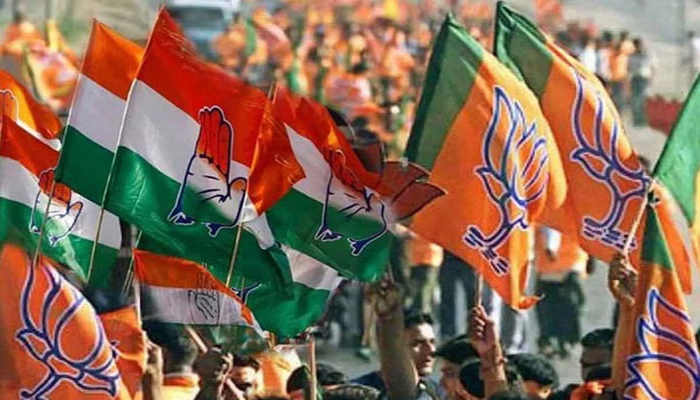
The Bharatiya Janata Party (BJP) has registered a strong performance in Rajasthan’s municipal elections, winning 163 of the 309 urban local body seats for which results have been declared.
The Congress secured 103 seats, while independent candidates won 43. Vote counting began at 8 am across the state. A total of 38,889 candidates contested the elections, which will pave the way for the formation of governing boards in 10 municipal corporations, 47 municipal councils and 252 municipalities.
Elections Held In Two Phases
Polling for the Rajasthan municipal elections was conducted in two phases on September 9 and 11, with counting taking place simultaneously across the state. The combined voter turnout stood at 73.56%, more than three percentage points higher than the turnout recorded in the previous urban local body elections.
The contest featured candidates from the BJP and Congress, along with a significant number of independents and candidates from several regional and national parties.
BJP, Congress Field Thousands Of Candidates
The BJP fielded 9,290 candidates, while the Congress had 9,027 candidates in the fray. Independents formed the largest group, with 18,732 candidates contesting.
Among other parties, the Rashtriya Loktantrik Party (RLP) fielded 948 candidates, followed by the Aam Aadmi Party (AAP) with 311, the Bahujan Samaj Party (BSP) with 298, the CPI(M) with 185 and the Bharat Adivasi Party (BAP) with 98 candidates.
Civic Poll Results Carry Political Significance
The results are significant for the BJP government led by Chief Minister Bhajan Lal Sharma, as the party seeks to consolidate its support base in Rajasthan’s urban areas following its victory in the 2023 Assembly elections.
For the Congress, the civic polls provide an important opportunity to assess the strength of its organisational network after its defeat in the Assembly elections. The outcome could also offer an indication of voter sentiment in urban Rajasthan and the competitive position of the two major parties at the grassroots level.
With governing boards now set to be formed across hundreds of urban local bodies, the results are likely to shape local political dynamics in the state in the coming months.
Comments are closed.