
India’s UNSC Bid Gets Boost as Four European Nations Back Permanent Seat

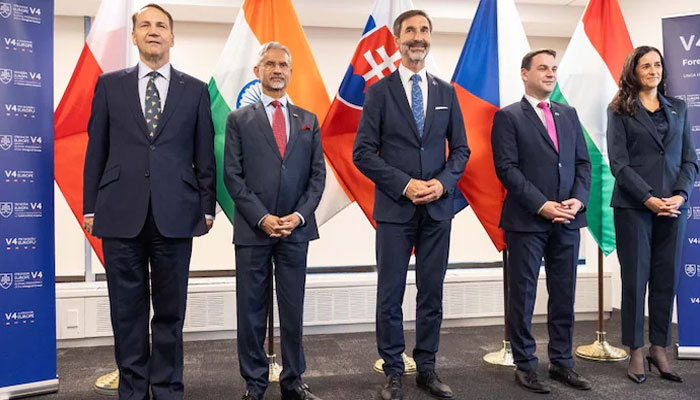
India’s long-standing campaign for a permanent seat on the UN Security Council received fresh support from four Central European countries during a first-of-its-kind meeting between India and the Visegrad Group on the sidelines of the 81st UN General Assembly in New York.
Hungary, Poland, Slovakia and the Czech Republic, which make up the Visegrad Group, backed India’s call for a permanent place on the Security Council. Slovak Foreign Minister Juraj Blanár said the four countries agreed that India, as a member of the Global South and an emerging power in the Indo-Pacific, should have a permanent seat.
Why India is seeking a permanent UNSC seat
India’s campaign is rooted in the argument that the composition of the Security Council no longer reflects today’s global political and economic landscape.
The Council was established in 1945, when much of Asia and Africa remained under colonial rule. India argues that countries with major populations, economies and growing diplomatic influence should have a greater role in the UN’s principal body responsible for international peace and security.
India has previously served eight terms as an elected, non-permanent member of the Security Council, most recently in 2021-22. New Delhi has also launched its campaign for another non-permanent term for 2028-29.
India’s broader case for reform points to its population, economic weight, UN peacekeeping contribution and expanding role in areas such as counterterrorism, maritime security, development and international diplomacy.
Support extends beyond the V4
The latest backing comes on top of support India has received from several other major countries for its permanent-membership aspirations.
France, the United Kingdom, the United States and Russia have all expressed support for India’s permanent membership at different times. India is also part of the G4 grouping with Brazil, Germany and Japan, with the four countries supporting one another’s bids for permanent seats.
However, support from individual countries does not by itself resolve the wider dispute over how the Security Council should be expanded.
The difficult question of Security Council reform
The current Security Council has 15 members, including five permanent members — the United States, Russia, China, France and the UK — and 10 elected members.
Discussions on reform involve several unresolved issues, including how many new seats should be created, which regions should receive representation and whether any new permanent members should receive veto powers.
China has not joined the other four permanent members in explicitly backing India’s permanent-seat bid, while Beijing has said it supports Security Council reform and understands India’s aspirations.
Any substantial reform would ultimately require changes to the UN Charter and broad agreement among member states, making the process complex.
Veto remains a major issue
One of the most contentious questions is the veto power held by the five existing permanent members.
India has argued against creating a separate category of permanent members with fewer rights. New Delhi has supported an “all or none” approach, under which new permanent members would receive the same privileges and responsibilities as the existing P5.
The African Union has also called for greater permanent representation for Africa and has raised the issue of equal rights for any new permanent members.
India and V4 expand cooperation
The UNSC issue was part of a broader discussion between India and the four Central European countries.
External Affairs Minister S Jaishankar described the first V4-India foreign ministers’ meeting as a “new historic occasion”. The two sides agreed to work towards an annual business forum and regular meetings of foreign ministers.
The discussions also covered defence, technology, innovation, space, connectivity, education and people-to-people ties. The ministers exchanged views on international developments, including the Ukraine conflict, the situation in the Gulf and wider Indo-Pacific issues.
Slovakia, which currently holds the V4 presidency, said the meeting opened the way for regular dialogue and practical cooperation in areas including trade, energy security and multilateral affairs.
What the latest support means
The V4 backing adds another group of countries to the list supporting India’s demand for a permanent role on the Security Council. However, it does not by itself guarantee reform or India’s eventual admission as a permanent member.
The broader process remains dependent on negotiations among UN member states and agreement on the structure, powers and regional distribution of any expanded Security Council.
Comments are closed.