
Bengal SIR: Tribunal Judges Flag EC Portal Gaps, Say ‘Can’t Restore Deleted Voters’

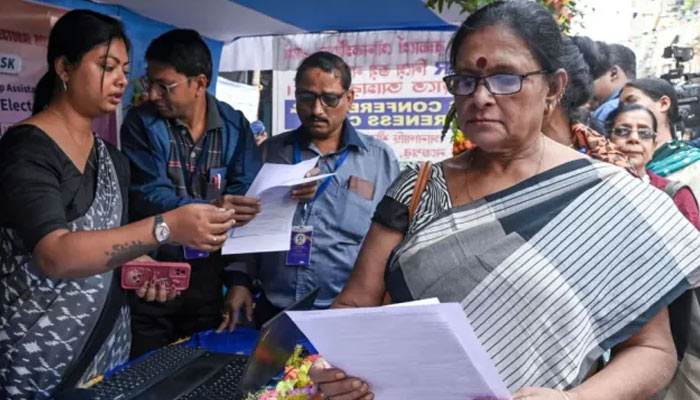
Tribunal Judges Flag Major Gaps in EC Portal
The appellate process for voters deleted from West Bengal’s electoral rolls has run into several digital and procedural hurdles, with judges of more than a dozen Supreme Court-directed Tribunals flagging shortcomings in the Election Commission of India’s portal.
The concerns were recorded in the minutes of a meeting held on August 11 involving more than a dozen of the 19 Tribunals constituted to hear appeals linked to the Special Intensive Revision (SIR).
According to the minutes, the portal did not have facilities for serving notices to parties, uploading additional documents, conducting virtual hearings or restoring a deleted voter following a judicial order. Appellants were also unable to download copies of Tribunal orders through the system.
The concerns were subsequently communicated to the Election Commission and the Chief Justice of the Calcutta High Court.
Notices Could Not Be Sent Through Portal
One of the biggest problems identified by the judges was the absence of a proper mechanism to notify parties about hearings.
The Tribunal judges said repeated requests had been made for a common system through which notices could be served directly or through the appropriate authorities. They also noted that a notice format approved by some Tribunal members in May had still not been implemented.
With no dedicated mechanism available, Tribunals were reportedly relying on emails sent through District Magistrates or District Election Officers. Judges said the response through this route was poor and was slowing the disposal of appeals.
No Facility to Upload Additional Documents
The judges also raised concerns about cases where documents uploaded by appellants were incomplete or did not correspond with the required enumeration records.
According to the minutes, there was no mechanism on the portal for Tribunals to obtain additional documents from appellants. This forced individual Tribunals to devise their own methods of seeking the required records.
The lack of a standardised digital process, the judges said, was creating difficulties in dealing with appeals efficiently.
Deleted Voters Could Not Be Restored
Another significant issue concerned the inability to restore a voter’s name on the portal after a Tribunal order.
The judges recorded that once an appeal resulted in deletion or inclusion, there was no mechanism to restore the voter if a subsequent judicial order required restoration.
The limitation is particularly significant because the appellate system was created to allow voters affected by the SIR deletions to challenge their exclusion.
No Virtual Hearing Facility
The portal also lacked a mechanism for conducting virtual hearings, according to the Tribunal judges.
This meant that when a Tribunal wanted to hear parties remotely, there was no dedicated facility within the designated system to do so.
The judges said the absence of such features was affecting the functioning of the appellate process.
Appellants Could Not Download Tribunal Orders
The Tribunal members further pointed out that appellants had no procedure through the portal to obtain a certified or downloadable copy of an order.
This meant that voters could not easily access the reasons for their inclusion or deletion through the designated digital system.
The issue assumes importance because the Supreme Court had directed the Tribunals to examine records and communicate reasons while deciding appeals.
Physical Appeals Also Raised Concerns
The judges also highlighted problems involving appeals submitted physically to District Magistrates, District Election Officers and other designated authorities.
According to the minutes, there was no clear mechanism to maintain and track such records if they were not digitised and uploaded onto the portal.
The judges warned that if physical appeals were not brought into the proper digital system, affected citizens could potentially be denied an effective opportunity to pursue their cases.
The Supreme Court had itself flagged this issue on April 6, noting that physical appeals were permitted and that the concerned authorities were required to ensure their digitisation and uploading on the ECINET platform.
Earlier Warning From Tribunal Judge
The August meeting was not the first time concerns over the system had been raised.
On May 22, a Tribunal judge had written to the Chief Justice of the Calcutta High Court, pointing out that the absence of a mechanism to notify parties was adversely affecting the pace at which appeals were being disposed of.
The judge also questioned the accuracy of data being circulated regarding the number of appeals decided, alleging that the lack of a proper notice mechanism was not being adequately reflected in information being shared with the media.
EC, Calcutta High Court Yet to Respond
The concerns have also drawn attention because of earlier questions surrounding the Election Commission’s digital systems.
The Indian Express had previously reported that two Election Commissioners had recorded multiple objections over decisions concerning electoral-roll procedures and access to ECINET, the Commission’s principal digital platform.
The EC subsequently announced plans to constitute a committee involving an independent expert to review the system and examine its compliance with legal requirements.
The Indian Express sent queries to the Election Commission and the Registrar General of the Calcutta High Court on October 1 seeking responses to the Tribunal judges’ concerns and asking whether the issues had been resolved. No response had been received at the time of publication.
27 Lakh Deleted Voters at the Centre of Appeal Process
The Tribunal system was created following Supreme Court intervention in the West Bengal SIR process.
The Election Commission had initially identified 60.06 lakh electors on the basis of what it described as “logical discrepancies” and “unmapped” cases arising from documents submitted during the revision.
Judicial officers subsequently examined these cases, with 27.16 lakh electors ultimately deleted from the rolls ahead of the Assembly elections.
The Supreme Court, exercising its powers under Article 142, had ordered the appointment of judicial officers to examine voter eligibility. It later directed the creation of appellate Tribunals headed by retired High Court judges so that affected voters could challenge their exclusion.
The EC notified 19 single-member appellate Tribunals on March 20. Two judges have since resigned for personal reasons and were reportedly replaced.
Appeals Far Exceed Disposals
The scale of the backlog has added to concerns over the functioning of the appellate mechanism.
In a submission before the Supreme Court on September 18, the EC said 38.31 lakh appeals had been filed as of September 10. Only 1.26 lakh appeals had been disposed of by that date.
Of the total appeals, 22.21 lakh were filed by deleted voters, while another 16.10 lakh sought deletion of names that had been included.
The figures underline the scale of the task facing the Tribunals and the importance of an effective digital mechanism for notices, document submission, hearings and implementation of orders.
Earlier Portal Problems Also Reached Supreme Court
The Tribunals had encountered technical difficulties even before the appellate stage.
During Supreme Court proceedings, judicial officers involved in examining the original SIR cases had raised concerns about another portal used to process the roughly 60 lakh names.
In its March 10 order, the Supreme Court noted the concerns conveyed through the Chief Justice of the Calcutta High Court and said the Election Commission had assured the court that the problem would be rectified immediately.
The court had also urged the EC to provide full logistical support to the High Court and judicial officers handling the SIR-related work.
The latest concerns raised by the appellate Tribunal judges now place the functioning of the post-deletion appeal mechanism under renewed scrutiny, particularly for the millions of voters seeking a review of their electoral status.
Comments are closed.