

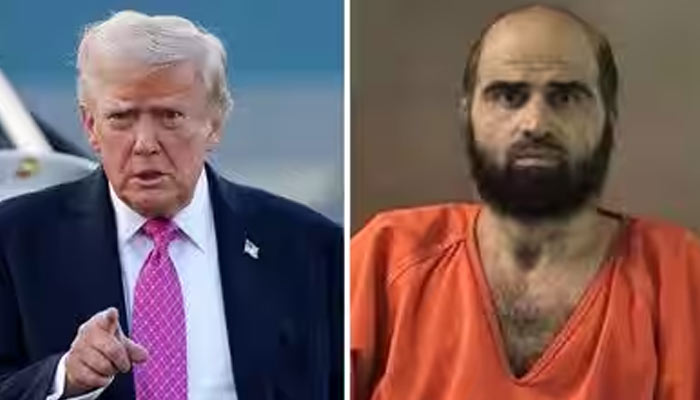
Trump Approves Firing Squad Execution for Fort Hood Shooter Nidal Hasan
US President Donald Trump has approved a firing squad execution for former US Army Major Nidal Hasan, who was sentenced to death for the 2009 mass shooting at Fort Hood in Texas.
The Pentagon announced the decision late Monday. Pentagon spokesperson Sean Parnell said on X that Defence Secretary Pete Hegseth had recommended the execution method and would determine the timeline and location for carrying out the sentence.
“Judgment day for Hasan has finally come,” Parnell said, recalling the attack in which 13 people were killed and 32 others were wounded.
Is Firing Squad Execution Legal in the US?
Firing squad executions remain legal in five US states: Idaho, Mississippi, Oklahoma, South Carolina and Utah. South Carolina carried out three such executions in 2025, while Utah last used the method in 2010.
The method is also permitted under US military law, although military executions are extremely rare.
A firing squad execution generally involves securing the condemned person to a chair and placing a target over the chest. A group of trained executioners then fires rifles simultaneously at the target from a designated position.
In some jurisdictions, one rifle may contain a blank round so individual shooters cannot know who fired a lethal shot.
Firing squads are also legally authorised in several other countries, including Indonesia, North Korea, Taiwan, Cuba, the UAE, Bahrain, Yemen, Somalia and Saudi Arabia. Brazil and El Salvador permit the method in certain military-conflict circumstances.
What Happened at Fort Hood?
On November 5, 2009, Hasan opened fire inside the Soldier Readiness Processing Center at Fort Hood, a major US military installation near Killeen, Texas.
Hasan, an Army psychiatrist, was armed with an FN Five-seven semi-automatic handgun when he attacked troops preparing for deployment. Thirteen people were killed and 32 were wounded in the shooting.
The attack was eventually stopped after civilian police officers confronted Hasan and shot him. He survived but was left paralysed from the waist down.
Investigators later examined Hasan’s contacts with extremist figures, including the late US-born radical cleric Anwar al-Awlaki.
Hasan’s Court-Martial and Death Sentence
Hasan faced a military court-martial in 2013 and represented himself during the proceedings. He acknowledged carrying out the shooting but argued that his actions were intended to prevent US troops from deploying overseas and harming Muslims.
A military jury convicted him of 13 counts of premeditated murder and 32 counts of attempted premeditated murder. He was subsequently sentenced to death.
Hasan has remained on military death row at the US Disciplinary Barracks at Fort Leavenworth, Kansas, since his conviction.
Trump’s approval marks a major step toward carrying out the military death sentence, although further legal proceedings could still affect the timing of the execution.
Comments are closed.