
Common Indian Bird Found Carrying Drug-Resistant Bacteria, Raising New Health Concerns

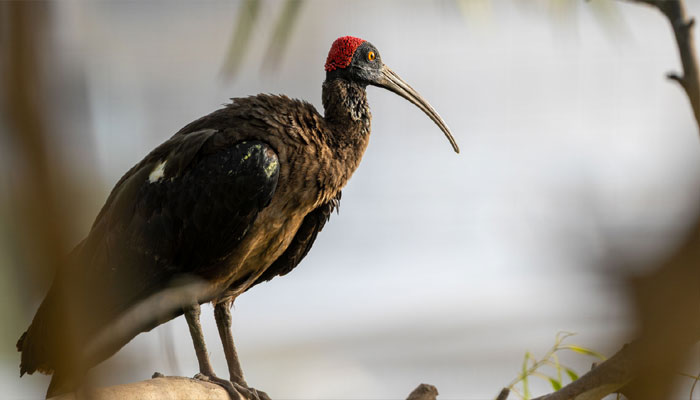
A familiar Indian bird that regularly feeds in wetlands, agricultural fields and even garbage-strewn areas has been found carrying multidrug-resistant bacteria, according to a study conducted in Udaipur, Rajasthan.
Researchers found that 40% of the bacterial isolates recovered from red-naped ibises showed resistance to at least three classes of antibiotics. The finding adds to concerns about the growing spread of antimicrobial resistance (AMR) across wildlife, the environment and human-dominated spaces.
Also known as the Indian black ibis, the red-naped ibis is a common resident bird across the Indian subcontinent. Its ability to thrive in a wide range of habitats—including farmland, grasslands, villages, cities and wetlands—makes it an important species for studying how wildlife interacts with environments affected by human activity.
What Did The Study Find?
Researchers from Mohanlal Sukhadia University collected 45 faecal samples from free-ranging red-naped ibises in Udaipur between July 2022 and June 2023.
The samples yielded 60 bacterial strains belonging to eight different genera. E. coli was the most frequently identified bacterium, followed by Enterobacter and Klebsiella.
Several isolates showed resistance to multiple antibiotics. Researchers also identified four bacterial types that had not previously been reported in red-naped ibises.
Two of them—Enterobacter mori and Enterobacter soli—were reported in red-naped ibises for the first time anywhere in the world, according to the study.
These bacteria are generally associated with soil and plants, suggesting that the birds may acquire them while searching for food in wetlands, fields and other potentially contaminated environments.
How Can Wild Birds Pick Up Resistant Bacteria?
Wild birds can come into contact with antibiotic-resistant bacteria through contaminated water, soil, food, waste and other environmental sources.
Because red-naped ibises move between different habitats, they can potentially carry microorganisms from one environment to another. This makes wildlife an important area of study as scientists try to understand how antimicrobial resistance circulates through ecosystems.
However, the presence of resistant bacteria in bird droppings does not establish that the birds are transmitting infections to humans.
The study highlights a possible environmental connection rather than proving a direct wildlife-to-human transmission route.
What Is Antimicrobial Resistance?
Antimicrobial resistance occurs when microorganisms, particularly bacteria, develop the ability to survive medicines that are normally used to kill or control them.
When bacteria become resistant to several classes of antibiotics, infections caused by them can become more difficult to treat. This can increase the risk of prolonged illness, complications and treatment failure.
The discovery of resistant bacteria in wildlife therefore matters because it provides another indication of how widespread antimicrobial resistance can become across interconnected environments.
Should Birdwatchers Be Worried?
The findings do not suggest that simply seeing, photographing or observing a red-naped ibis poses an immediate health risk.
For birdwatchers, wildlife enthusiasts and visitors to wetlands, basic hygiene remains the most sensible precaution. People should avoid touching bird droppings, refrain from handling sick or dead birds without appropriate protection and wash their hands after spending time outdoors.
It is also sensible to avoid eating or drinking in areas that may be contaminated with animal waste.
These are routine wildlife and hygiene precautions—not a warning to avoid wetlands, birdwatching or nature trails.
The study instead highlights a broader environmental concern: as antibiotic resistance continues to spread, monitoring bacteria in wildlife could help scientists better understand how resistant microorganisms move between animals, ecosystems and human-impacted environments.
Comments are closed.