
Environment Minister: 40% Canopy Cover in Aravallis Can Earn Green Credits

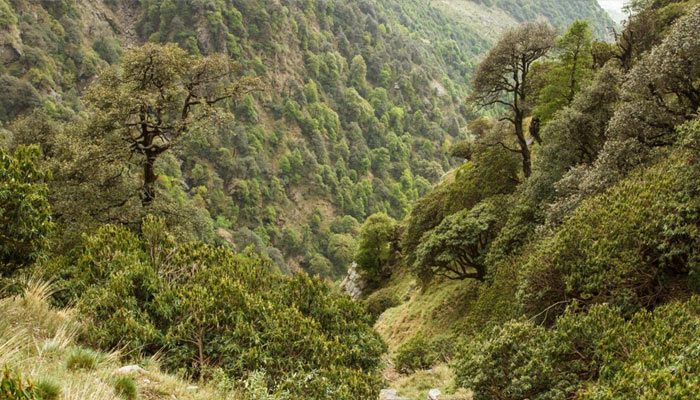
40% Canopy Cover in Aravallis Can Earn Green Credits, Says Environment Minister Bhupender Yadav.
Union Environment Minister Bhupender Yadav on Wednesday said organisations can now earn green credits by undertaking afforestation in the Aravalli range. “If any organisation takes up afforestation on degraded forest land according to the forest department’s management plan and achieves 40% canopy cover in four to five years, it can obtain green credits,” Yadav said.
Currently, the programme is underway across 750 acres in Gurugram and 250 acres near the Manesar Industrial Area. Yadav emphasised that mining is neither allowed in Delhi’s Aravallis nor in most districts of Haryana, dispelling misconceptions about the region.
Around 97 sq km of Aravalli revenue land in Haryana, from Naurangpur to Nuh, has already been identified for afforestation and declared a Protected Forest. The Green Credit scheme allows private and government entities to lease forest land for afforestation or timber projects without paying mandatory environmental compensation fees. A January 2 ministry letter reclassified such activities as “forestry activities,” exempting them from compensatory afforestation requirements and net present value charges.
Eco-Restoration Framework
Yadav also released a new eco-restoration framework for the Aravalli landscape, drafted by Delhi-based Sankala Foundation. Based on pilot projects in four Gurugram villages — Sakatpur, Naurangpur, Shikohpur, and Gairatpur Bas — the report proposes a replicable model for forest and biodiversity management, invasive species control, water resource management, livelihood diversification, urban planning, and adaptive monitoring.
The report highlights severe degradation across the Aravallis, including fragmented forests, invasive species like Prosopis juliflora and Lantana camara, groundwater depletion, and over 43% of households relying on forests for firewood, fodder, and medicinal plants. Women play a key role in managing resources, but alternative livelihoods remain limited.
Aravalli Degradation
Spanning Delhi, Haryana, Rajasthan, and Gujarat, the Aravalli range acts as a climate barrier, but has lost over 40% of forest cover since 1970 due to tree felling, illegal construction, and mining. Rajasthan alone lost 25% of its hills since 1967–68, and the Central Empowered Committee’s 2024 report noted 31 out of 128 hills disappeared due to human activity. In Haryana, desertification affects 8.2% of land, with 5,77,270 hectares of the Aravallis lost by 2019 and a projected further 22% degradation by 2059.
The framework aims to restore degraded patches while balancing ecological, social, and economic priorities, creating a model that can be scaled across 29 districts in the four states.
Comments are closed.