
Ex-Indian Envoy Flags SIR Data Mismatch, Questions Citizenship Verification Process

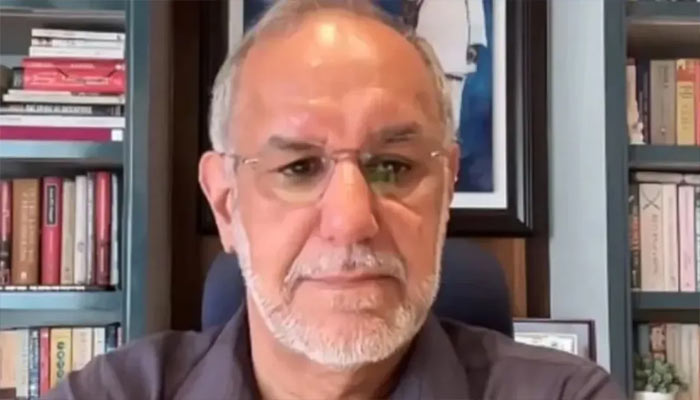
Former Envoy Navdeep Suri Questions SIR Process After Being Asked to Prove Citizenship
Former Indian diplomat Navdeep Suri has raised concerns over the transparency of the Election Commission’s Special Intensive Revision (SIR) exercise after he was asked to provide documents establishing his Indian citizenship.
Suri, who previously served as India’s High Commissioner to Australia and Ambassador to the United Arab Emirates and Egypt, shared his experience on X and questioned whether the verification process provides sufficient clarity to voters.
Suri recounts verification experience
According to Suri, he approached a Booth Level Officer in Punjab during the SIR exercise and submitted his voter ID and Aadhaar card. He said the BLO initially assured him that his details were in order.
The situation changed when a volunteer later informed him that his details did not match the electoral roll dating back to 2003. Suri said the BLO subsequently issued him a notice asking him to submit documents establishing his Indian citizenship.
‘What’s the fate of the common citizen?’
Suri said the verification process was particularly difficult in his case because he was posted outside India in 2003 and was therefore not present in the country when the older electoral records were prepared.
He was asked to produce his passport as proof of citizenship.
Expressing his frustration, Suri said he had documents beyond his voter ID and Aadhaar but questioned what the process would mean for ordinary citizens who may not have access to extensive records.
“If I have trouble establishing my citizenship after representing India in three countries, what’s the fate of the common citizen?” he said.
SIR requires linkage with earlier electoral records
Under the SIR exercise, voters whose names do not appear in the electoral rolls used for the relevant previous revision are required to submit supporting documents to establish their eligibility and link themselves to earlier records.
The Election Commission had initially specified a set of documents for the verification process. Following the Supreme Court’s intervention, Aadhaar was also accepted as an additional document, though its role is subject to the applicable verification framework.
The SIR exercise has triggered a wider debate over voter verification, documentation requirements and the potential difficulties faced by people whose names or records do not match older electoral rolls.
Courts have also emphasised that the Election Commission’s authority over electoral-roll revision is subject to legal safeguards, including principles of fairness, transparency and natural justice.
Comments are closed.