

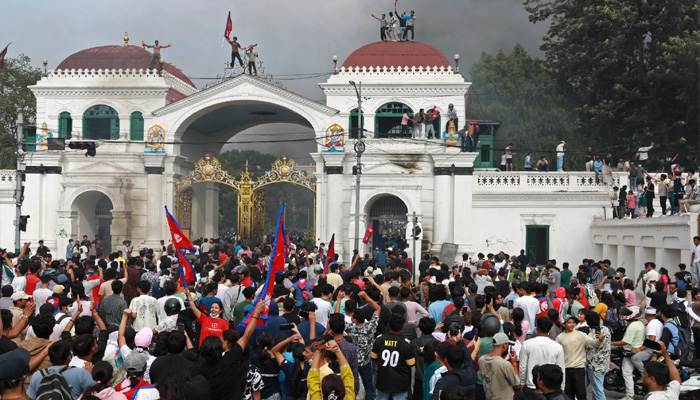
Nepal’s Gen Z Announces Plans to Form Political Party Ahead of 2026 Elections.
Nepal’s youth-led Gen Z group on Saturday revealed its plans to launch a political party, signaling its intent to consolidate young voices across the country. The group clarified that it will participate in next year’s general elections only if certain “bottom-line” conditions are met.
The Gen Z group, which played a key role in protests against corruption and the government’s social media restrictions, was instrumental in the resignation of former Prime Minister KP Sharma Oli.
At a press conference, leader Miraj Dhungana outlined the party’s agenda, emphasizing demands for a directly elected executive system and voting rights for Nepali citizens abroad. The group also intends to establish a citizen-led committee to monitor corruption and introduce clear economic transformation policies.
“We will continue to fight for good governance, transparency, and accountability. The sacrifices of Gen Z youths must not be wasted,” Dhungana said, appealing for collective commitment from all stakeholders. He added that the group is currently gathering suggestions for an appropriate party name.
On economic priorities, Dhungana highlighted the need to boost domestic production and expand into neighboring markets, citing Nepal’s reliance on foreign employment. He urged the interim government to reopen closed industries, create jobs, and develop the tourism sector.
The general elections for Nepal’s House of Representatives are scheduled for March 5, 2026, as announced by President Ramchandra Paudel, following the formation of an interim government led by former Chief Justice Sushila Karki on September 12.
Background: Gen Z Protests
Nepal’s political landscape was shaken last month when Prime Minister KP Sharma Oli resigned amid widespread youth-led protests. The demonstrations erupted over issues including a social media ban and perceived government inaction on corruption.
The unrest peaked on September 8 when clashes between security forces and protesters resulted in at least 19 deaths. Demonstrators, primarily from the Gen Z demographic, continued protests even after Oli’s resignation, targeting Parliament, government offices, party headquarters, and the residences of senior leaders.
Comments are closed.