
Salt and Sugar for Babies? SciencBabies and Salt-Sugar Debate: Grandma Approves, Science Disagreese Says No, Grandma Says Yes

Salt and Sugar for Babies: Why Science Says No (Even If Grandma Disagrees)
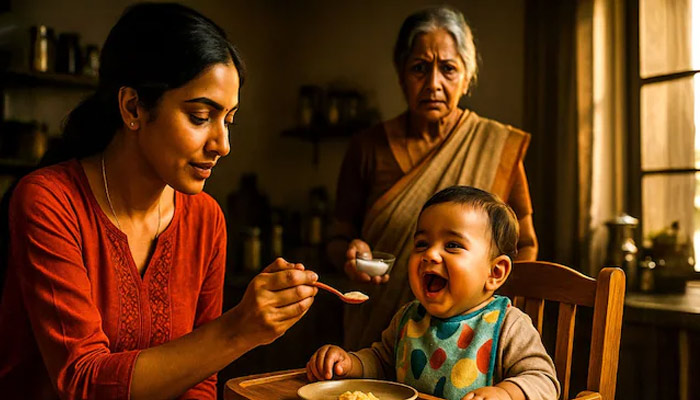
For Nishtha Sharma* (a new mother) and her mother-in-law Parul Sharma*, mornings often begin with the same tug-of-war. Ever since Nishtha’s six-month-old daughter began solids, the grandmother insists on adding a pinch of salt or sugar—convinced the baby will “miss the taste.”
But Nishtha can’t help asking: If she’s never tasted them, how could she miss them?
This is a familiar scene for many new parents—caught between medical advice and family tradition.
What the doctors say
Dr Nanditha Rathinam (Manipal Hospital, Bengaluru) likens the first two years of a baby’s diet to laying a house’s foundation: “Strong, steady, built to last.” Everything eaten now shapes growth, future health, and even food preferences.
Dr Rajiv Chhabra (Artemis Hospitals, Gurugram) says babies’ bodies can’t handle extra sugar or salt well. Sugary foods:
- Increase cavities
- Reduce appetite for healthy foods
- Encourage a lifelong preference for overly sweet tastes
Salt:
- Overloads kidneys
- Masks natural flavours, reducing interest in varied, healthy foods
- Causes calcium loss, weakening bones
Both nutrients are already present in perfect amounts in breast milk or formula—around 0.2g sodium/day for salt.
Sugar’s impact on infants
According to Dr Parimala V Thirumalesh (Aster CMI Hospital, Bengaluru), sugar early in life makes it harder for babies to accept less-sweet foods later. It can cause early tooth decay, irritability, disrupted sleep, and raise long-term risks for obesity and type 2 diabetes.
Starting low-sugar in the first 1,000 days also reduces future chances of high blood pressure.
Salt’s impact on infants
Dr Vittal Kumar Kesireddy (CARE Hospitals, Hyderabad) warns that excess salt can strain infant kidneys and alter fluid balance. Over time, it may dull their acceptance of natural food flavours.
Why grandparents resist change
Many say, “We gave salt and sugar to our kids, and they turned out fine.” But as Dr Rathinam notes, diets decades ago were simpler, with less hidden salt and sugar in processed foods.
Dr Thirumalesh adds that for many elders, seasoning a baby’s food feels like love—and removing it feels like taking joy away from mealtimes. Cultural traditions and family recipes also play a big role.
Dr Sarthak Dave (psychiatrist, Ahmedabad) says it’s also emotional: elders may feel they’re losing influence over the child’s upbringing.
Bridging tradition and science
Doctors recommend:
- First 12–24 months: No added sugar or salt
- Use natural sweetness from bananas, mangoes, carrots, or sweet potatoes
- Enhance flavours with mild herbs or spices after 12 months
- Introduce sugar and salt minimally after 1–2 years, keeping the diet nutrient-rich
The key? Remember you’re on the same team. Traditions can evolve when backed by new knowledge. Start babies on plain, wholesome foods, and you set them up for a lifetime of healthy eating—without the early addiction to sugar and salt.
Comments are closed.