
Self-Immolation, Street Protests: Nepal’s Youth-Backed Government Faces Growing Gen-Z Anger

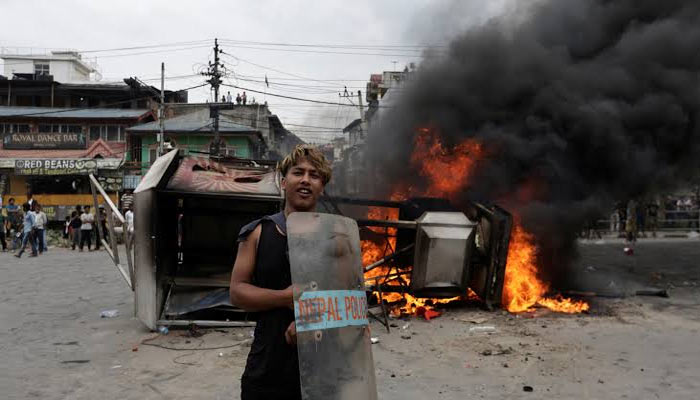
A wave of protests has erupted across Nepal over the government’s eviction of squatters without a permanent rehabilitation plan, posing the first major public challenge to Prime Minister Balen Shah’s administration.
The demonstrations, driven largely by young activists and students, have intensified following allegations of police excesses, arrests and deteriorating conditions at temporary shelters for displaced families.
Evictions trigger widespread anger
Hundreds of protesters gathered in Kathmandu on Saturday under the banner of the Joint National Squatters Front, demanding an end to forced evictions and calling for permanent housing for landless families.
Demonstrators carried placards reading “End atrocities against the poor,” “Respect human rights,” and “Provide shelter to squatters,” reflecting growing resentment over the government’s handling of the eviction drive.
The protests began after authorities removed informal settlements across Kathmandu Valley and relocated hundreds of families to temporary holding centres, where activists say living conditions are inadequate.
Self-immolation incident fuels protests
Public anger intensified earlier this month after 25-year-old Ganesh Nepali allegedly set himself on fire after city police reportedly immobilised his motorcycle with a wheel lock.
The incident became a rallying point for youth activists, who have since accused authorities of using excessive force against demonstrators.
The situation escalated further after flooding affected one of the temporary settlements housing displaced families. When activists visited the site to assess conditions, police reportedly dispersed the gathering with batons, leaving several protesters injured. One activist required hospital treatment following the clashes.
Arrests draw political criticism
Local media reported that activists, students and journalists have been detained during the protests.
Opposition leaders, including Nepali Congress president Gagan Kumar Thapa, criticised the arrests and called for the immediate release of those taken into custody.
Police also detained 26 people in Koshi Province for demonstrating in support of the Kathmandu protesters.
Thousands affected by eviction drive
The eviction campaign, launched in April, has resulted in the demolition of settlements belonging to more than 2,600 families, affecting an estimated 15,000 people across Kathmandu Valley and other parts of Nepal.
Around 325 families have since been housed in temporary holding centres. Earlier this month, the government directed residents to vacate the shelters, but dozens of families refused, saying they had nowhere else to relocate.
Challenge for a youth-backed government
The growing unrest presents a significant political test for Prime Minister Balen Shah, who built much of his public support among younger voters during his rise in Kathmandu politics.
The protests bear similarities to last year’s youth-led demonstrations that reshaped Nepal’s political landscape, raising questions about whether the government’s handling of the eviction crisis could erode the support of the same generation that once championed Shah’s leadership.
Comments are closed.