
“Trump Orders US Withdrawal from Middle East, Cites Rising Iran Tensions”

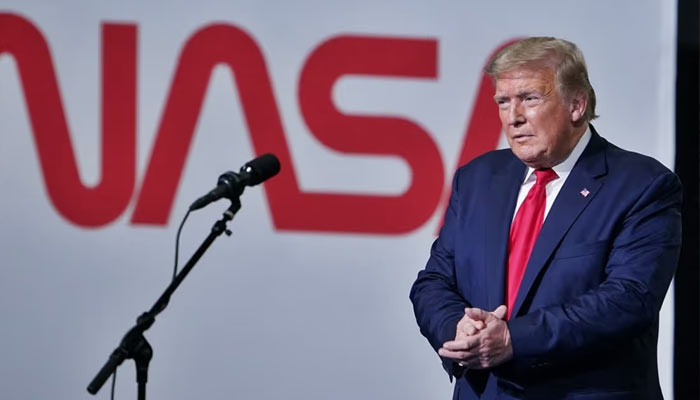
Trump Orders Middle East Pullback Amid Escalating Iran Tensions.
WASHINGTON / BAGHDAD —
President Donald Trump on Wednesday confirmed that the United States is repositioning its personnel across the Middle East due to mounting tensions with Iran, declaring the region “a dangerous place” and reiterating that Washington would not allow Tehran to acquire a nuclear weapon.
“We’ve given notice to move out,” Trump told reporters. “They are being moved out because it could be a dangerous place… They can’t have a nuclear weapon. Very simple.”
The move comes amid heightened alerts across the region and as prospects for reviving a nuclear deal between Iran and the U.S. continue to deteriorate. Four U.S. and two Iraqi officials told Reuters that the State Department has authorized the voluntary departure of non-essential personnel from its embassy in Iraq, as well as military families in Bahrain and Kuwait.
The U.S. State Department updated its global travel advisory Wednesday night, citing “heightened regional tensions” and formally ordering non-emergency personnel to leave select Middle Eastern posts.
While the U.S. embassy in Kuwait remains fully staffed, other diplomatic outposts are reviewing security protocols. Iraq’s state media, however, reported that Baghdad had not recorded any threats requiring evacuation.
Military Readiness and Oil Impact
Defense Secretary Pete Hegseth has approved the voluntary departure of U.S. military dependents from several bases across the Middle East, particularly Bahrain, where most families are located. Though the drawdown is described as precautionary, the U.S. military remains on standby for emergency support if needed, especially at the Baghdad embassy.
Despite the scaled-down presence, officials said there are no changes at the Al Udeid Air Base in Qatar — the largest U.S. military installation in the region.
Markets responded swiftly to the developments, with Brent crude rising over 4% to $69.18 per barrel following reports of the U.S. embassy drawdown in Baghdad. The UK’s maritime agency warned of potential military escalation affecting shipping through the Gulf, Gulf of Oman, and the Strait of Hormuz.
Iran Tensions and Retaliation Warnings
The latest U.S. move comes as diplomatic channels remain stalled. Trump has repeatedly threatened military action should negotiations over Iran’s uranium enrichment fail. A deal appears increasingly unlikely, with Iran expected to present a counterproposal in the coming days after rejecting the latest U.S. offer.
Meanwhile, Iran’s Defence Minister Aziz Nasirzadeh warned that any strike against Iran would provoke retaliation against U.S. bases in the region. An Iranian official told Reuters that threats of force were “a negotiating tactic” but would have “serious consequences.”
In a post on X (formerly Twitter), Iran’s UN mission said, “Threats of ‘overwhelming force’ won’t change facts: Iran is not seeking a nuclear weapon and U.S. militarism only fuels instability.”
General Michael “Erik” Kurilla, head of U.S. Central Command, who recently offered a range of military options to the White House, postponed scheduled testimony before Congress due to the deteriorating situation.
Regional Flashpoints Intensify
The U.S. maintains forces in Iraq, Kuwait, Qatar, Bahrain, and the UAE. Iraq — a rare regional partner of both the U.S. and Iran — hosts 2,500 American troops and has faced recurrent attacks from Iran-aligned militias since the Israel-Gaza war began in October 2023.
Tensions have remained elevated following direct missile and drone exchanges between Israel and Iran in 2024 — the first known direct strikes between the two countries — with Iraqi airspace used in the confrontations.
Israel has also targeted Iran-linked militant groups in Syria and Iraq in recent months. While U.S. forces had bolstered regional deployments in early 2024, including B-2 bombers and two aircraft carriers, most have since withdrawn.
Comments are closed.