

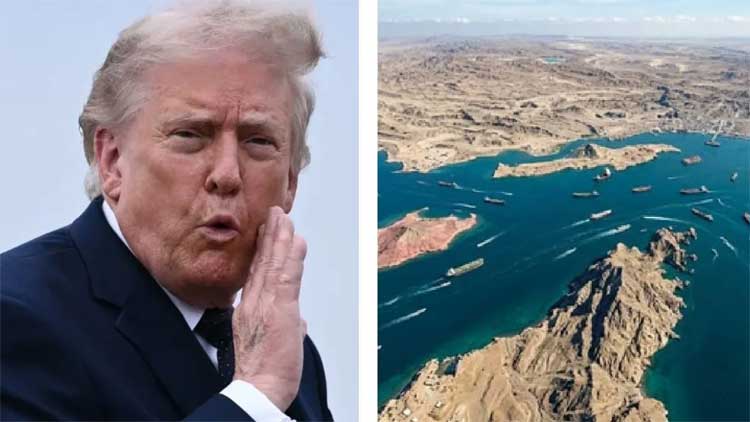
US President Donald Trump said on Saturday that a largely negotiated memorandum of understanding aimed at ending the Iran conflict could lead to the reopening of the strategically vital Strait of Hormuz, although Iranian media quickly challenged that assertion.
In a post on Truth Social, Trump said discussions on the framework were nearing completion and suggested that the agreement would restore access to the waterway, a crucial global oil transit route that has faced severe disruption since the US and Israel launched military operations against Iran in February.
“Final aspects and details of the Deal are currently being discussed, and will be announced shortly,” Trump wrote, without providing details on the broader contents of the proposed agreement.
However, Iran’s Fars news agency reported on Sunday that Trump’s description of the emerging arrangement was inaccurate. According to the report, the proposal under discussion would instead give Iran authority over managing traffic through the strait, adding that Trump’s claim about reopening the route was “inconsistent with reality.”
Nuclear concessions reportedly part of discussions
According to reports by Axios, the US and Iran are nearing an arrangement that could reopen the Strait of Hormuz without transit tolls under an extended 60-day ceasefire. The proposal would also allow Iran to freely export oil while negotiations continue over restrictions on Tehran’s nuclear activities.
In return, Washington would reportedly ease restrictions on Iranian ports and issue limited sanctions waivers related to Iranian oil exports.
The draft framework is also said to include commitments from Iran not to pursue nuclear weapons and to engage in negotiations over suspending uranium enrichment and addressing its stockpile of highly enriched uranium.
Reports also suggested that Tehran could eventually give up its stockpile of highly enriched uranium, though the mechanism for doing so would likely be addressed in later rounds of talks.
Trump has repeatedly maintained that US military actions were intended to prevent Iran from obtaining nuclear weapons. Tehran, however, has consistently denied seeking nuclear arms and says its uranium enrichment program is designed for civilian purposes.
Pakistan emerges as key mediator
Iran said on Saturday that work was underway on a memorandum intended to end the conflict following meetings with senior Pakistani officials, including army chief Asim Munir.
Pakistan’s military described the discussions as yielding “encouraging” progress, while sources involved in negotiations indicated that the developing agreement could become a broad framework to formally end hostilities.
Pakistani Prime Minister Shehbaz Sharif publicly praised Trump’s diplomatic efforts, describing them as significant steps toward peace.
According to sources familiar with discussions, the proposed framework could unfold in three phases: formally ending the war, resolving tensions around the Strait of Hormuz, and beginning a negotiation period on a wider political agreement.
Iran says major issues remain unresolved
Despite signs of movement, Iranian officials indicated that several issues remain unsettled.
Foreign Ministry spokesperson Esmail Baghaei said recent discussions had reduced disagreements but warned that important matters still required mediation.
Iran has pushed for oversight of the Strait of Hormuz, an end to US restrictions on its shipping activity, and the removal of sanctions targeting oil exports.
Baghaei also stressed that Tehran’s immediate priority remains ensuring that further US attacks do not occur and addressing broader regional security concerns.
Meanwhile, senior Iranian figures warned that despite the ceasefire, Iran had rebuilt parts of its military capabilities and remained prepared if hostilities resumed. Iranian officials also insisted the country had retained significant missile, drone and enriched uranium capabilities throughout the conflict.
Comments are closed.