
Trump warns Iran: Reopen Strait of Hormuz in 48 hours or face strikes on power infrastructure

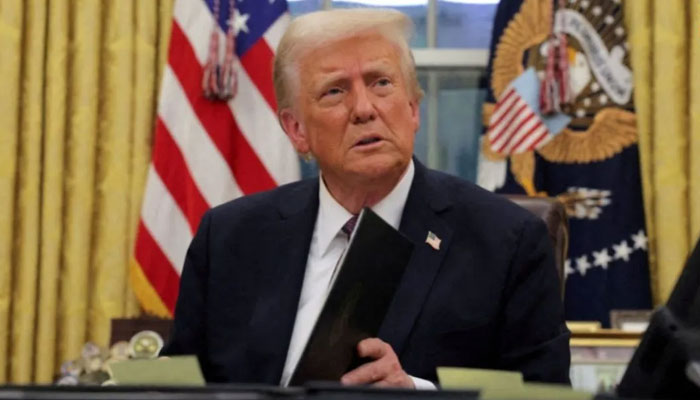
Donald Trump on Saturday issued a stark ultimatum to Iran, warning of strikes on its power infrastructure if Tehran does not reopen the strategically vital Strait of Hormuz within 48 hours.
In a social media post, Trump said the United States would “hit and obliterate” Iranian power plants—starting with the largest—if the waterway is not “fully open, without threat” within the deadline.
War enters a more dangerous phase
The warning comes as the conflict enters its fourth week, with hostilities escalating beyond their initial scope. Israeli officials said Iran has, for the first time in the current war, deployed long-range ballistic missiles, raising concerns about the conflict’s expanding reach.
According to Israeli military chief Eyal Zamir, Iran launched missiles with a range of up to 4,000 km, capable of reaching parts of Europe. Iranian strikes have also reportedly caused casualties near sensitive sites in Israel.
Meanwhile, Iranian media said US and Israeli forces targeted the Natanz nuclear facility on Saturday, further intensifying the confrontation.
The conflict has already taken a heavy toll, with more than 2,000 deaths reported in Iran and at least 15 in Israel since the fighting began.
Why Hormuz matters
The Strait of Hormuz—a narrow corridor connecting the Persian Gulf to global markets—handles roughly 20% of the world’s oil supply. Iran’s recent restrictions on passage have disrupted energy flows and driven up global oil prices.
The situation has triggered widespread concern, with over 20 countries urging the restoration of safe maritime transit.
Europe, Japan signal coordinated response
Amid fears of a global energy shock, several major economies—including United Kingdom, France, Germany, Italy, Netherlands and Japan—have expressed readiness to coordinate efforts to ensure safe passage through the waterway and stabilise markets.
Trump targets NATO, sends mixed signals
Earlier, Trump criticised NATO, calling it a “paper tiger” without US support and accusing allies of failing to act decisively during the crisis.
At the same time, he hinted that US military operations could wind down soon, claiming Washington is “very close” to achieving its objectives. However, mixed signals followed, with the administration also indicating a potential easing of sanctions on Iranian oil to curb rising fuel prices.
No end in sight
Despite talk of de-escalation, the conflict shows no signs of slowing, with tensions continuing to rise both militarily and economically.
Comments are closed.