
UPI payments above Rs 2,000: 76% users may switch to cash, cards if MDR is passed on

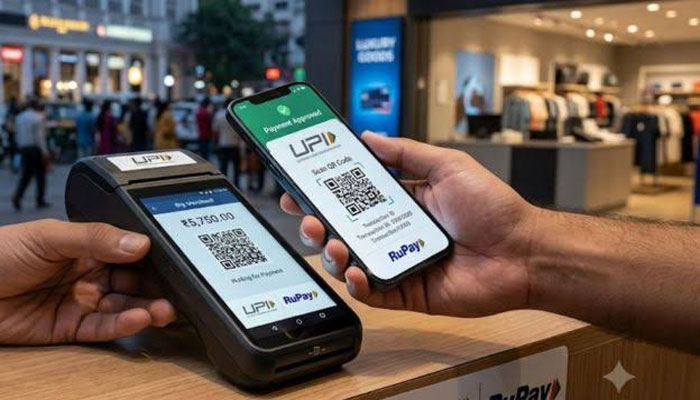
India’s UPI ecosystem is set for a major test from October 15, when a 0.4% merchant discount rate (MDR) will apply to certain person-to-merchant UPI payments above Rs 2,000.
While the government has said the MDR is not meant to be passed on to consumers, a new LocalCircles survey suggests that many users could shift to cash, credit cards, debit cards or bank transfers if merchants charge them extra for using UPI.
Only 14% of surveyed UPI users said they would continue using UPI and absorb the additional cost if a merchant charged a fee on payments above Rs 2,000. The rest said they would choose another payment method, seek a fee-free option, or avoid or delay the purchase.
The survey received more than 67,000 responses from UPI users across 291 districts. For the question on how consumers would respond to an additional charge, there were 31,206 responses.
WHAT IS MDR AND WHY IS IT BEING INTRODUCED?
MDR, or merchant discount rate, is a fee associated with digital payment transactions that is distributed among banks, payment service providers and other participants in the payment ecosystem.
UPI has operated under a zero-MDR model for merchants for the past several years. From October 15, a 0.4% MDR will apply to person-to-merchant UPI payments above Rs 2,000 under the new framework.
The government has stressed that the MDR is not a consumer charge.
The Finance Ministry has said MDR is “neither a tax nor a charge collected by Government or NPCI”. Banks have also been instructed to ensure that merchants do not pass the cost on to customers, while UPI apps cannot impose platform fees or hidden charges.
The key question, therefore, is whether merchants will absorb the cost or attempt to recover it from customers.
CASH, CARDS COULD BENEFIT IF MERCHANTS CHARGE EXTRA
LocalCircles asked UPI users what they would do if a merchant demanded an additional fee for a UPI payment above Rs 2,000.
Cash emerged as the most common alternative, with 27% saying they would pay in cash.
Another 26% said they would switch to a credit card, while 14% would use a debit card. Four% said they would opt for bank transfers such as NEFT or IMPS, while 9% would ask the merchant for another payment option without an additional charge.
Only 14% said they would continue with UPI and pay the additional amount. Another 2% said they would avoid or postpone the purchase, while 4% were undecided.
The findings indicate that even if the additional amount is relatively small, consumers may be unwilling to pay it for a payment method that has traditionally been free.
76% MAY MOVE LARGE PAYMENTS AWAY FROM UPI
The survey also examined longer-term payment preferences if UPI transactions above Rs 2,000 were to attract an additional cost.
Among 37,654 respondents, 26% said credit cards would become their preferred option and another 26% chose cash. Debit cards accounted for 13%, while 11% said they would use bank transfers, NEFT or IMPS.
Only 20% said UPI would remain their most-used payment method for purchases above Rs 2,000 if it involved an additional cost. Four% were unsure.
That means 76% of surveyed users indicated they could shift larger payments away from UPI if using it became more expensive.
Cards together accounted for 39% of the alternatives, while cash accounted for 26%.
WHICH UPI PAYMENTS WILL BE AFFECTED?
The new MDR framework does not cover every UPI transaction.
Payments of up to Rs 2,000 remain outside the MDR, while person-to-person transfers continue to be free.
Small merchants receiving up to Rs 1 lakh a month through UPI QR codes are also exempt. The government has said around 96% of merchant transactions will not be affected.
The impact is therefore concentrated on higher-value merchant payments.
These include purchases such as electronics, household goods, restaurant bills, travel and other transactions where the payment amount can exceed Rs 2,000.
The value involved is substantial. UPI processed a record 24.51 billion transactions worth Rs 29.82 lakh crore in August 2026, according to the survey release.
Merchant payments accounted for 15.51 billion transactions worth Rs 8.95 lakh crore. Payments above Rs 2,000 represented 67% of the value of those merchant transactions.
So although only a portion of UPI transactions by volume will be covered, the MDR applies to a much larger share of the value of merchant payments.
MERCHANTS ALSO RELUCTANT TO ABSORB MDR
The potential shift among consumers comes against concerns from merchants themselves.
A separate LocalCircles survey of more than 32,000 businesses across 242 districts found that only 17% were willing to absorb a 0.4% MDR on UPI payments above Rs 2,000.
Forty-one% said they would not bear any MDR, while 9% said they did not accept UPI payments.
Among merchants who were willing to accept an MDR, 0.04% was the most commonly cited preferred ceiling, chosen by 15% of respondents.
This creates a potential gap between the government’s position and merchant sentiment. While the government says the cost should not be passed on to consumers, many merchants surveyed said they were unwilling to absorb the fee.
HOW MUCH WOULD 0.4% MDR COST?
The MDR rate may appear small, but the amount rises with the value of the transaction.
At 0.4%, the MDR on a Rs 5,000 purchase would be Rs 20. On a Rs 50,000 transaction, it would be Rs 200.
An 18% GST is also levied on the MDR, although merchants can claim input tax credit, according to the survey release.
For consumers, however, the larger issue could be the introduction of a cost for a payment method that has so far been free.
An earlier LocalCircles survey in August, involving more than 45,000 UPI users across 322 districts, found that 53% said they would move away from UPI for larger payments if merchants passed the MDR on to them.
In a March 2025 survey, 73% of UPI users said there should be no charge on UPI transactions.
WHAT CHANGES FROM OCTOBER 15?
The government has maintained that consumers should not be required to pay the MDR.
Finance Minister Nirmala Sitharaman said on September 22 that “the responsibility does not lie with the customer” and that the MDR would not be passed on to consumers, according to the LocalCircles release.
The Finance Ministry is working with the Indian Banks’ Association on a mechanism to monitor merchants and prevent the cost from being transferred to customers. An awareness campaign in regional languages is also planned to inform consumers that they do not have to pay an additional UPI charge.
However, LocalCircles said the framework does not yet clearly specify penalties or a refund mechanism for consumers who are wrongly charged.
That leaves the October 15 rollout facing a practical question: what happens when a customer is asked to pay extra for using UPI?
Officially, consumers are not supposed to bear the MDR. But the survey findings suggest that even the possibility of an additional charge could encourage many users to choose cash, cards or bank transfers for larger purchases.
The rollout could therefore test not only merchant acceptance of the new MDR model, but also how strongly India’s shift towards digital payments has been tied to UPI remaining free at the point of use.
Comments are closed.