
Wildfires Worsening Air Quality Across US, Erasing Years of Clean-Air Gains: Study

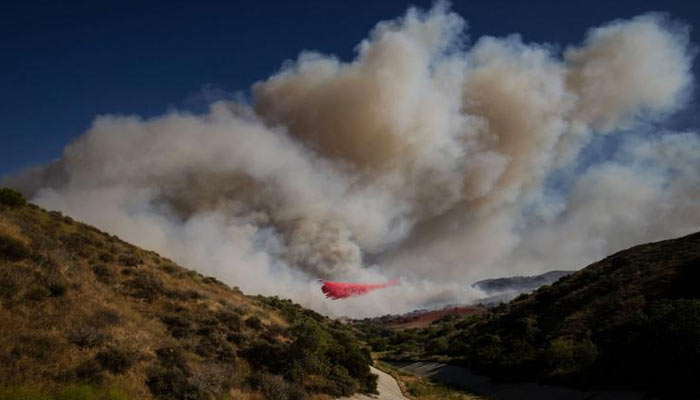
Wildfire Smoke Reversing Years of US Air Quality Gains, New Study Warns
After more than a decade of steady improvement in air quality, the United States is witnessing a troubling reversal as increasingly intense wildfires drive smog levels higher across the country, according to a new study published in the journal Science. Researchers say smoke from large-scale wildfires is undermining years of progress achieved through stricter environmental regulations and cleaner technologies.
The study found that national ground-level ozone concentrations — a key component of smog — declined by 11 per cent between 2003 and 2015 as emissions from power plants, vehicles and industrial sources were brought under tighter control. However, since 2015, ozone levels have climbed by around 4 per cent, largely due to growing wildfire activity.
Researchers warn that if wildfire emissions continue to rise at current rates, national smog levels could return to their early-2000s levels within the next two decades.
Wildfires Erasing Clean-Air Progress
Scientists from the University of Iowa found that smoke from wildfires releases chemicals that react with sunlight to form ozone, worsening air pollution even in regions located far from active fire zones.
Lead author Weizhi Deng and his team used a combination of satellite observations, weather data, pollution records and artificial intelligence to build a high-resolution nationwide map of ozone concentrations. Their analysis suggested that traditional monitoring networks may underestimate the scale of the problem because air-quality monitors cover only a small portion of the country.
The researchers also estimated that rising ozone pollution linked to wildfire smoke has contributed to an additional 318 deaths annually in the United States since 2013.
Health Risks Extend Far Beyond Fire Zones
Experts say elevated ozone levels can trigger asthma attacks, worsen respiratory illnesses and increase the risk of premature death. While fine particle pollution remains the deadliest component of wildfire smoke, ozone continues to pose a major public-health threat.
A separate study conducted by many of the same researchers previously found that wildfire-related particle pollution contributes to hundreds of additional deaths each year, highlighting the growing health burden associated with larger and more frequent fires.
The problem has become particularly visible in recent years as smoke from massive Canadian wildfires drifted south into the United States. During the severe wildfire seasons of 2022, 2023 and 2024, millions of Americans experienced unhealthy air conditions despite living hundreds or even thousands of kilometres away from the fires.
Climate Change Playing a Major Role
Scientists say climate change is a key factor behind worsening wildfire seasons. Rising temperatures and prolonged dry conditions create environments that are more conducive to large, fast-spreading fires.
However, researchers note that climate change is not the sole driver. Land management practices, vegetation conditions, ignition sources and firefighting strategies also influence wildfire behaviour and emissions.
The largest increases in ozone pollution were recorded in the Northern Rockies and parts of the Midwest, regions heavily affected by smoke transported from major wildfire zones.
Growing Concern Over Future Air Quality
Environmental and public-health experts warn that the findings highlight a growing challenge for policymakers. While regulations have successfully reduced pollution from traditional sources, the increasing impact of wildfire smoke threatens to offset those gains.
The study underscores how climate-driven environmental changes are reshaping air-quality trends across North America, raising concerns that cleaner air achieved over decades could become increasingly difficult to maintain as wildfire seasons grow longer and more severe.
Comments are closed.