

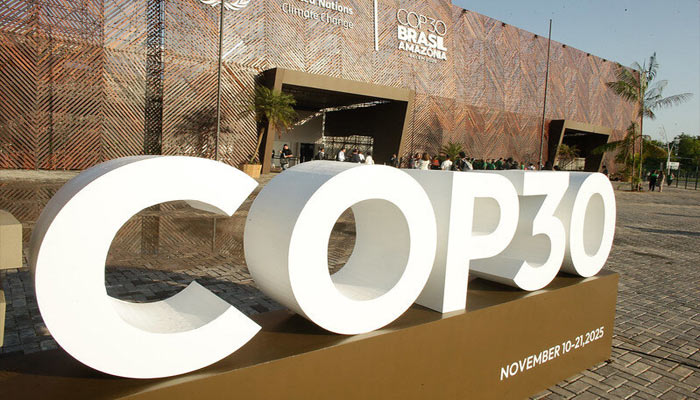
The 30th Conference of the Parties (COP30) in Belém took place against a backdrop of shifting geopolitical alignments that are steadily reshaping global climate diplomacy.
With Western climate leadership fragmented, Europe reassessing its ambitions and the United States absent from full engagement, the balance of influence at the negotiations moved decisively towards emerging economies.
This shift was evident in COP30’s outcomes. The summit delivered incremental progress on adaptation and social equity, fell short on mitigation, and exposed the scale of institutional reform required to make global climate governance effective. Most notably, it highlighted the growing confidence and coordination of BRICS and broader Global South coalitions in shaping both the substance and tone of climate negotiations.
Incremental gains, structural shortfalls
COP30 produced a familiar blend of ambition and limitation. Under the “Global Mutirão” framework, developed countries committed to tripling adaptation finance to US$120 billion annually by 2035, up from the current US$40 billion, within a wider aspiration to mobilise US$1.3 trillion per year for climate action. While the headline figures signal intent, the extended timeline underscores the persistent gap between immediate adaptation needs and financial delivery.
Some progress was made on the Global Goal on Adaptation (GGA), with the adoption of 59 indicators covering food and water security, infrastructure resilience and social protection. This helped entrench adaptation as a core pillar of climate ambition, particularly for countries already experiencing severe climate impacts.
The Just Transition agenda was also strengthened through explicit references to labour rights and the inclusion of Indigenous peoples, women, youth and informal workers. These principles were formally linked to nationally determined contributions (NDCs) and national adaptation plans (NAPs). However, the absence of clear funding pathways, timelines and implementation mechanisms limited their practical impact.
Mitigation remained the weakest pillar. Existing NDCs continue to fall well short of the 1.5°C pathway. In response, the Baku–Belém Political Package introduced the “Belém Mission to 1.5” and a Global Implementation Accelerator aimed at narrowing the gap between ambition and action. Their effectiveness will depend on political follow-through beyond the negotiating process.
Nature and forests featured prominently, with the launch of the US$125 billion Tropical Forests Forever Facility, a payment-for-performance mechanism prioritising Indigenous stewardship and rainforest conservation. Yet the failure to agree on a binding deforestation roadmap once again left outcomes dependent on national political will rather than enforceable commitments.
The most consequential omission was the absence of a binding fossil-fuel phase-out. Despite support from more than 80 countries, resistance from major oil and gas producers resulted in the removal of explicit language from the final text, with Brazil tasked instead with developing a roadmap over the coming year. This gap places COP30 at odds with scientific timelines and exposes the limits of consensus-based climate diplomacy.
Climate finance debates further reflected entrenched divisions. While adaptation finance saw limited movement, unresolved questions over grants versus loans, debt burdens and delivery mechanisms continue to undermine trust. New pledges for forest finance and nature-based solutions were announced, but the broader architecture of climate finance remains fragmented.
The consolidation of a Global South climate bloc
Beyond individual outcomes, COP30’s most significant signal was geopolitical. As traditional climate powers struggled to lead, BRICS and other Global South groupings demonstrated unprecedented coherence and agenda-setting capacity.
Brazil’s presidency anchored climate action in equity, forest protection and climate justice, positioning the Amazon as both a global climate stabiliser and a symbol of historical ecological imbalance. India, speaking for the BASIC and Like-Minded Developing Countries groupings, reaffirmed the principle of Common but Differentiated Responsibilities and Respective Capabilities (CBDR-RC), called for predictable climate finance, and pushed back against unilateral carbon-border measures.
China emphasised technology transfer, renewable energy cooperation and South–South capacity building, while South Africa foregrounded Africa’s adaptation needs and socially just transitions. Russia, despite its hydrocarbon dependence, supported calls for reforming Multilateral Development Banks to expand concessional finance for developing economies.
A notable development was the growing institutional coherence within BRICS. For the first time, the bloc arrived at a COP with a joint climate-finance position, calling for systemic reform of global financial institutions and more accessible concessional flows. The New Development Bank reinforced this agenda through green bonds, blended finance and local-currency lending, aimed at reducing reliance on volatile Western capital markets.
Momentum extended beyond BRICS. Ethiopia advanced its Green Legacy Initiative ahead of COP32, Egypt moved closer to its 2030 renewable energy targets, and several West Asian economies expanded clean-energy and mitigation programmes. Collectively, these initiatives reflect a shift from reactive participation to proactive agenda-setting by the Global South.
India in a multipolar climate order
India’s engagement at COP30 closely aligned with the summit’s emphasis on adaptation, just transitions, technology cooperation and climate finance reform. Its BRICS-backed bid to host COP33 in 2028 reflects a development-centred climate vision grounded in equity and pragmatic pathways to transition.
India’s position is structurally distinctive: it accounts for around 17 percent of the global population but less than 4 percent of historical emissions, while undertaking one of the world’s largest clean-energy transitions. Programmes such as the PM Surya Ghar Muft Bijli Yojana, rapid solar expansion, and leadership in the International Solar Alliance and the Coalition for Disaster Resilient Infrastructure illustrate how equity and innovation are being integrated into its climate strategy. Its G20 presidency further reinforced this orientation by foregrounding Global South priorities in global economic governance.
Viewed together, India’s COP33 bid and COP30 engagement signal more than national ambition. They reflect a broader transition towards a multipolar climate order—one in which BRICS and emerging economies play a central role in shaping rules, finance and expectations, anchored in equity, shared responsibility and realistic pathways to climate action.
Comments are closed.