

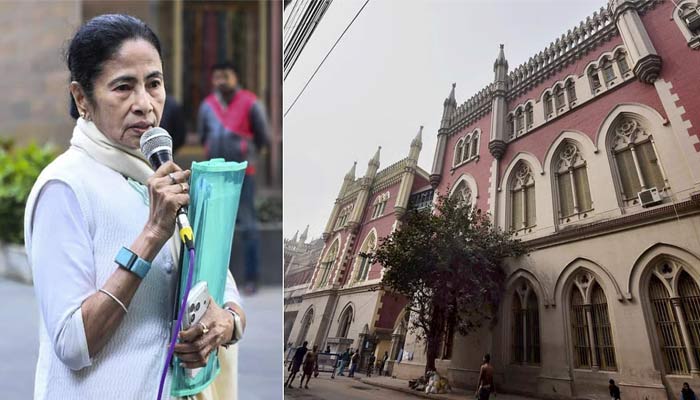
The Enforcement Directorate (ED) has approached the Supreme Court by filing an Article 32 petition, alleging that its investigation into the I-PAC-linked coal smuggling case was obstructed by the West Bengal government and Chief Minister Mamata Banerjee.
In its plea, the central agency has sought a Central Bureau of Investigation (CBI) probe into the incident, claiming that its constitutional right to conduct a fair and independent investigation was curtailed by state authorities.
The ED has detailed a sequence of events it described as a “showdown” during search operations at premises linked to political consultancy firm I-PAC, which has been engaged by the Trinamool Congress (TMC) for election strategy. The agency alleged that its officials were prevented from lawfully carrying out searches and seizing material relevant to the coal smuggling probe.
According to the ED, documents and electronic devices were forcibly removed from the premises in the presence of senior state officials, amounting to obstruction of justice and compromising the integrity of the investigation.
The plea comes amid escalating legal and political tensions between the central agency and the TMC-led West Bengal government. The ED has argued that interference by state police and administrative authorities undermined its statutory powers under the Prevention of Money Laundering Act (PMLA).
Bengal Government Files Caveat
Anticipating the ED’s move, the West Bengal government filed a caveat in the Supreme Court, seeking to ensure that no order is passed without hearing the state’s version. The caveat aims to prevent the grant of any interim relief to the ED without due consideration of the state’s stand.
The dispute traces back to ED raids conducted in Kolkata at locations associated with I-PAC as part of a probe into an alleged multi-crore coal scam. The agency has claimed that proceeds of crime worth nearly ₹10 crore were routed to I-PAC through hawala channels and that the firm was paid by the Trinamool Congress for services rendered during the 2022 Goa Assembly elections.
Calcutta High Court Defers Hearing
On Friday, the ED had moved the Calcutta High Court seeking registration of an FIR against Chief Minister Mamata Banerjee for allegedly obstructing its search operations. However, hearings were deferred after both a single-judge bench and a division bench led by the acting Chief Justice postponed proceedings until after January 14.
In response, the Trinamool Congress and I-PAC filed counter-petitions in the High Court, disputing the ED’s allegations. They contended that the seized documents pertained solely to election planning and campaign strategy, arguing that such material falls outside the ambit of the PMLA.
The party accused the ED of attempting to unlawfully access confidential political material under the guise of an investigation. Additional complaints were also filed by the family of I-PAC chief Pratik Jain, alleging theft of documents during the searches—claims the ED has denied, asserting that its actions were lawful and followed due process.
Kolkata Police Probe ED Officials
Meanwhile, the Kolkata Police have initiated steps to identify ED officials accused of stealing documents during raids at Pratik Jain’s residence and office. FIRs were registered following complaints by Trinamool leaders alleging theft of election-related data.
Police officials said CCTV footage, DVR recordings and witness statements are being examined, and notices will be issued once identification is completed. Authorities have claimed that ED and CRPF personnel conducted searches without proper intimation, obstructed local police and failed to produce warrants.
Cases have been registered under criminal, trespass and Information Technology Act provisions, and investigations are ongoing.
With the matter now before the Supreme Court, the legal confrontation between the central agency and the West Bengal government has entered a critical phase, with the ED urging judicial intervention to protect the functioning of central agencies in states where it alleges institutional resistance.
Comments are closed.