
Trump to launch “Op Fury 2.0”? Rubio says diplomacy first, but military option remains on table

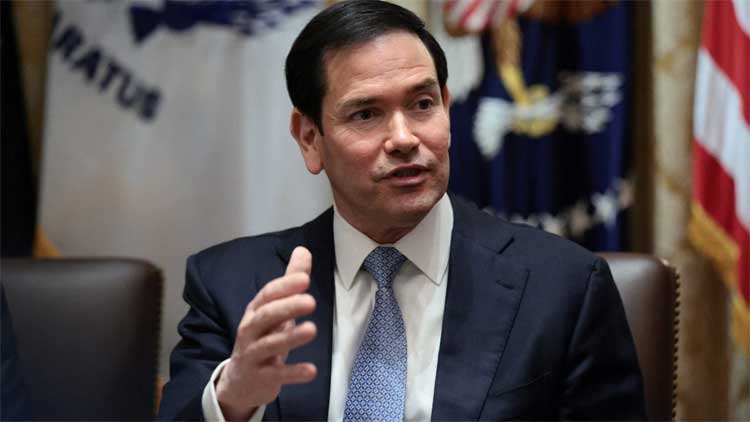
As prospects of progress in US-Iran diplomacy gain attention amid President Donald Trump’s warnings to Tehran, US Secretary of State Marco Rubio said Washington still prefers negotiations but made clear that military options remain on the table if talks fail.
In an interview with India Today TV, Rubio said the Trump administration’s priority remains preventing Iran from obtaining a nuclear weapon, with diplomacy being its preferred route.
“The President wants to make sure that Iran never has a nuclear weapon. He would prefer to address it through negotiated diplomatic means, and we’re going to exhaust every opportunity to do that,” Rubio said.
When asked whether that could involve renewed military action or a possible “Operation Fury 2.0,” Rubio avoided discussing specific plans but stressed that the option exists.
“But ultimately, that option exists there for the President if that doesn’t work out. That is not our preference. Our first choice is to do this through a negotiated agreement and that’s what we’re working towards,” he said.
His remarks came as Trump claimed the US and Iran had “largely negotiated” a deal aimed at reopening the Strait of Hormuz, the key global shipping route whose disruption has intensified energy market pressures following US and Israeli military operations against Iran in February.
Rubio reiterated that diplomacy remains central to US foreign policy under Trump. “As long as Donald Trump is President of the US, it will always be our preference to settle our differences with other countries diplomatically, through engagement, through negotiation,” he said.
He also said Tehran had an opportunity to move forward diplomatically, warning that responsibility for any breakdown in talks would fall on Iran. “If these efforts don’t work out, it will not be the fault of the US or our allies in the Gulf. It will be 100 per cent Iran’s fault,” Rubio said.
Iran has consistently denied seeking nuclear weapons, maintaining that its uranium enrichment programme is intended for civilian purposes.
Any agreement reinforcing the fragile ceasefire in place since April 8 could ease pressure on global markets, although analysts say broader energy concerns may persist.
Rubio on Hormuz
Calling Iran’s actions in the Strait of Hormuz “illegal, unlawful, reckless, dangerous and unacceptable,” Rubio argued that global trade routes cannot be controlled or restricted by individual states.
“There can’t be a system in which a country takes over an international waterway, blows up ships that don’t agree to pay them a toll. That cannot happen. That cannot be normalised,” he said.
Rubio said concerns over maritime access extend beyond US allies, noting that countries including India and China have also stressed the need for open shipping routes.
“The Strait needs to be open immediately and fully. We cannot allow a system in which they charge tolls and threaten to blow up commercial ships,” he said.
He outlined three broad principles he said should underpin any agreement with Iran: preventing Tehran from pursuing nuclear weapons, maintaining long-term limits on uranium enrichment, and deciding the future of Iran’s existing stockpile of highly enriched uranium.
“There’s no reason to have 60 per cent enriched uranium unless you want to turn it into 90 per cent enriched uranium and weaponise it,” Rubio said, adding that the negotiations would be complex but could bring benefits for Iran if successful.
India-US ties and trade
Rubio described India as one of Washington’s most important strategic partners, saying the relationship has evolved into a long-term alliance shaped by shared interests.
“It’s a strategic alliance. We have a lot of alliances around the world. But we have a handful of really important strategic alliances. And India is one of them,” he said.
He also said Prime Minister Narendra Modi is expected to visit the US for a standalone bilateral engagement separate from the G20 summit later this year.
“We want it to be a separate one. We want it to be a standalone visit,” Rubio said, adding that Washington hopes the meeting happens “as soon as possible.”
On trade, Rubio expressed optimism about an India-US agreement, suggesting negotiations were nearing completion.
“We hope to have it even next week or the week after — we’re down to very final details,” he said, noting that the deal involves broader market access and evolving sectors, not just tariffs.
Discussing the Quad grouping, Rubio said the platform should focus on practical cooperation rather than remaining a symbolic forum. He pointed to maritime security, critical minerals and supply chains as key areas for deeper coordination among member countries.
On Pakistan and terrorism
Addressing concerns over Pakistan and state-linked terrorism, Rubio said the US position remains unchanged: terrorism must be confronted regardless of where it originates.
“We want to deal with terrorism no matter where it’s emanating from,” he said.
Rubio added that extremist organisations operating within a country’s borders eventually become a threat to both neighbouring states and the host nation itself.
“I would hope that we would be able to work with Pakistani authorities to go after these very dangerous groups,” he said, arguing that such cooperation would benefit both regional stability and US security interests.
Comments are closed.