

Parliament Panel to Review NEET-UG Leak Probe, CBSE Evaluation System and Language Policy
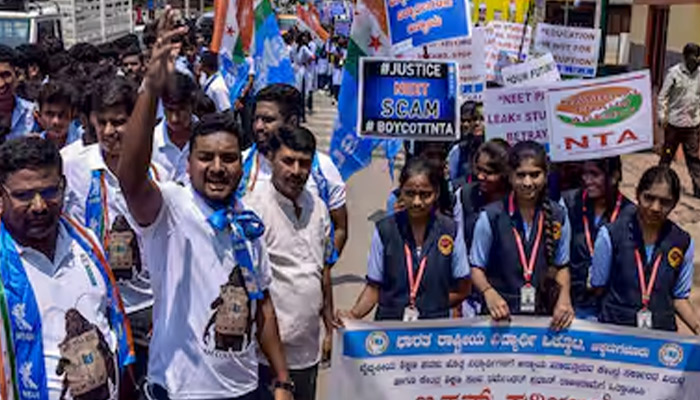
The Parliamentary Standing Committee on Education, Women, Children, Youth and Sports will hold key meetings on June 1 and 2 to review the NEET-UG 2026 paper leak case, examination reforms, CBSE’s evaluation process and the implementation of the three-language policy in schools.
The discussions come amid growing concerns over the integrity of national entrance examinations and ongoing efforts to strengthen the functioning of the National Testing Agency (NTA).
Focus on NEET-UG Leak and Examination Reforms
On June 1, the committee will meet senior officials, including the Secretary of Higher Education, the Secretary of the Ministry of Health, the Director General of the NTA and representatives from stakeholders such as the United Doctors Front.
The panel is expected to seek details on the NEET-UG 2026 paper leak investigation, examine vulnerabilities in the examination system and discuss reforms aimed at improving the conduct and security of national-level tests.
The meeting follows a review held on May 29, during which members stressed the need to safeguard the credibility of NEET-UG and address loopholes that may have enabled the leak.
CBI Probe and NTA Reforms Under Scrutiny
During the earlier review, the Committee on Government Assurances, chaired by AIADMK MP M Thambidurai, received briefings from senior officials, including Higher Education Secretary Vineet Joshi, NTA Director General Abhishek Singh, CBI Director Praveen Sood, Health Ministry representatives and officials from the National Medical Commission.
Members sought updates on the ongoing CBI investigation into the alleged leak of the NEET-UG 2026 question paper. The examination was subsequently cancelled and rescheduled for June 21.
According to sources, NTA officials informed the panel that the leak did not originate from the agency’s systems and that the CBI was continuing its investigation to identify the source of the breach.
Committee members also emphasised the need to ensure that the MBBS admission process remains on schedule and that counselling is not disrupted because of the controversy.
Review of K. Radhakrishnan Committee Recommendations
The parliamentary panel is also expected to assess the implementation of recommendations made by the high-level committee headed by former ISRO Chairman Dr K. Radhakrishnan.
The committee was constituted after the NEET-UG 2024 controversy to recommend reforms in examination processes, data security and the organisational structure of the NTA.
Officials informed lawmakers that nearly 75 per cent of the recommendations have already been implemented. The committee was also told that the NTA currently faces around 25 per cent vacancies and is taking steps to strengthen its workforce through fresh recruitment.
Members additionally reviewed preparations for transitioning NEET-UG to a computer-based examination format from next year, including infrastructure readiness and examination scheduling.
CBSE Evaluation Process and Language Policy on Agenda
On June 2, the committee will meet the Secretary of School Education and the Chairman of the Central Board of Secondary Education (CBSE).
Members are expected to examine the effectiveness of the On-Screen Marking (OSM) system used in CBSE Class 12 board examinations and discuss concerns raised by students regarding the evaluation process.
The panel will also review the implementation framework of the three-language policy for Classes 9 and 10 and seek clarifications on how it is being rolled out across schools.
Arrests in Leak Investigation
As part of its probe into the NEET-UG 2026 paper leak case, the CBI has so far arrested 13 individuals, including a doctor from Latur and a faculty member associated with a Pune-based coaching institute.
The upcoming parliamentary meetings are expected to play a significant role in assessing the progress of the investigation, reviewing examination reforms and strengthening safeguards to prevent similar incidents in the future.
Comments are closed.