

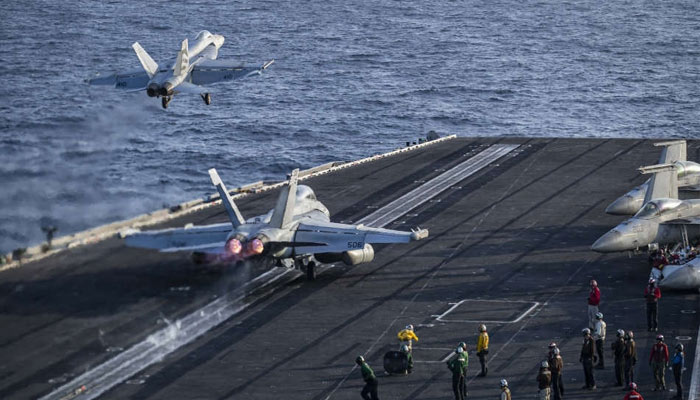
The United States carried out fresh military strikes in southern Iran on Monday, targeting missile launch sites and boats allegedly attempting to lay naval mines, even as diplomatic efforts to end the three-month-long conflict continued in Doha.
According to the United States Central Command, the strikes were “defensive” in nature and aimed at protecting American personnel stationed in the region. “US Central Command continues to defend our forces while using restraint during the ongoing ceasefire,” Navy Captain Tim Hawkins said in a statement.
Talks Continue In Doha
The strikes coincided with high-level talks in Doha involving Iran’s foreign minister and top negotiator, who were meeting with Qatar’s prime minister to discuss a possible framework agreement with the United States.
Officials familiar with the discussions said negotiations focused heavily on the future of the Strait of Hormuz and Iran’s stockpile of highly enriched uranium.
Earlier in the day, US Secretary of State Marco Rubio, speaking in New Delhi, said Washington would continue to pursue diplomacy before considering stronger options.
Rubio indicated there was a “solid” proposal under discussion that could involve reopening the Strait of Hormuz and launching time-bound nuclear negotiations.
Trump Warns Iran Of More Strikes
US President Donald Trump said talks with Iran were progressing positively but warned Tehran of further military action if negotiations failed.
In a post on Truth Social, Trump said the deal under discussion would either become “a Great Deal for all, or no Deal at all.”
Trump reiterated that preventing Iran from developing nuclear weapons remained Washington’s primary objective, though Tehran has repeatedly denied seeking nuclear arms capability.
Regional Tensions Continue To Escalate
The conflict’s regional dimensions also widened further on Monday.
Iranian media claimed the country had successfully shot down a “hostile” stealth drone using a newly deployed air defence system, though officials did not specify the drone’s origin.
Meanwhile, Benjamin Netanyahu announced intensified Israeli military operations against the Iran-backed Hezbollah militia in Lebanon.
Soon after, the Israeli military said it had launched strikes targeting Hezbollah infrastructure in Lebanon’s Bekaa Valley and other locations.
Although Israel and Lebanon reached a ceasefire agreement earlier this year, Israeli forces have continued periodic operations, describing them as defensive measures against Hezbollah.
Strait Of Hormuz Remains Central Issue
One of the key sticking points in negotiations remains the future of the Strait of Hormuz — a strategically critical waterway through which nearly one-fifth of global oil and LNG supplies typically pass.
Iranian foreign ministry spokesperson Esmaeil Baghaei said there was currently no final agreement regarding management of the strait.
However, he indicated that Iran would not impose tolls on passing vessels, though charges could apply for navigational and environmental services under a future protocol involving Oman.
Reports suggested the US and Iran were discussing a phased reopening plan under which Iran would remove naval mines from the waterway over a 30-day period after a broader agreement.
Oil Markets React
The ongoing conflict has sharply disrupted maritime traffic through the Strait of Hormuz, significantly reducing the number of vessels using the route since hostilities escalated earlier this year.
The tensions had earlier pushed global oil prices sharply higher and increased concerns around fuel, fertilizer and food costs worldwide.
However, oil prices dropped more than four percent on Monday amid growing optimism that diplomatic efforts could eventually produce a breakthrough agreement.
Comments are closed.