
Climate Change May Make Super El Niño Events More Severe, Researchers Say
The World Meteorological Organisation said there is an 80 per cent chance that an El Nino event develops between June and August.

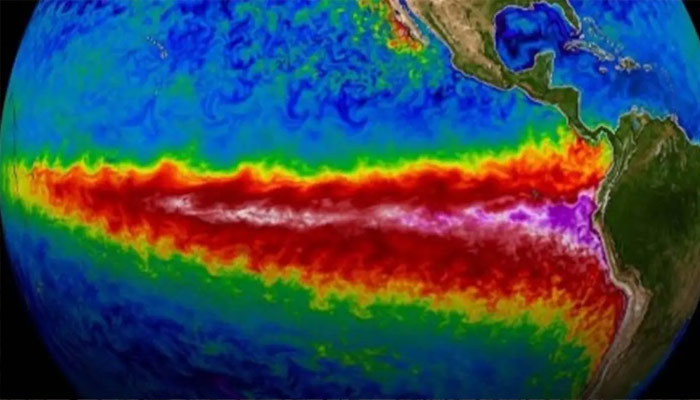
The El Niño weather pattern is forming and is expected to trigger extreme weather across the world this year.
The World Meteorological Organization (WMO) said on Tuesday, warning that climate change could significantly amplify its impacts.
The WMO said there is an 80% probability that an El Niño event will develop between June and August, with a 90% chance it will persist at least until November. The agency said the forecast provides one of the clearest signals yet of an emerging event.
El Niño occurs naturally every two to seven years when weakening trade winds allow warmer-than-average ocean waters to build up in the eastern Pacific. This typically leads to higher global temperatures and disrupted rainfall patterns, including droughts in some regions and heavy rains in others, while also influencing hurricane activity.
Why this El Niño raises concern
Scientists say two factors make the current outlook particularly worrying: the potential strength of the event and the added influence of climate change.
The WMO noted that while there is uncertainty in forecasts, some models indicate the possibility of a “strong” El Niño, defined by sea surface temperatures at least 1.5°C above average in parts of the Pacific.
The second concern is the warming climate itself. Human-driven greenhouse gas emissions have already raised global average temperatures by around 1.3°C since pre-industrial times, creating a higher baseline that can intensify natural climate patterns.
Experts say this combination can worsen heatwaves, droughts, heavy rainfall, and related disasters such as floods, wildfires, and crop failures.
“When we get an El Niño, because of the underlying climate change, these events become more intensified,” said Piers Forster, Professor of Physical Climate Change at the University of Leeds.
Potential for record-breaking heat
The WMO has warned that the interaction between El Niño and ongoing global warming could contribute to record-breaking global temperatures in the coming years. The last El Niño year, 2024, was already the hottest on record.
Scientists say each El Niño is different, but typical impacts include wetter-than-average conditions in parts of South America and Central Asia, and drier conditions in regions such as Central America and Australia. Heat extremes can also intensify in distant regions, including Europe.
Rising risks across regions
Researchers warn that stronger El Niño events combined with climate change could significantly increase disaster risks worldwide.
Severe flooding in southern Brazil in 2024, which killed more than 180 people and displaced hundreds of thousands, was intensified by both El Niño conditions and global warming, according to climate scientists.
“When you have an El Niño over what climate change already brought, the risks are enormous,” said Francisco Aquino, head of the climate centre at the University of Rio Grande do Sul.
In southern Africa, El Niño typically reduces rainfall, affecting agriculture and hydropower. Scientists say climate change is likely to make such dry conditions more severe and longer-lasting.
Experts also warn of stronger tropical cyclone activity in the Pacific due to warmer ocean temperatures, which provide more energy for storm formation.
“El Niño will input an enormous amount of energy into the system, so everything will be more intense,” said Antonio Navarra of the Euro-Mediterranean Center on Climate Change.
Scientists add that the current El Niño may offer a preview of future climate extremes, even beyond natural variability.
“It does give a window into the future,” said Piers Forster.
Comments are closed.