
Global Warming Is Widening Heavy Rainfall Regions Across the Planet: Study

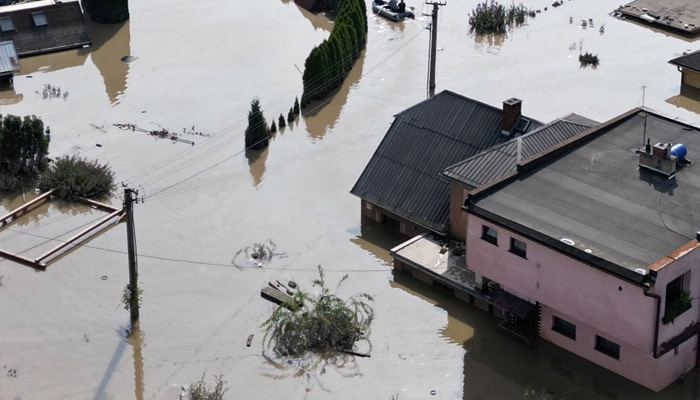
Climate Change Is Expanding Heavy Rainfall Zones Worldwide, but Flood Risk Won’t Rise Everywhere: Study
As the planet warms, heavy rainfall events are spreading across larger swathes of the globe. But where the greatest flood risks emerge in the future may depend as much on human settlement patterns as on climate change itself, according to a new study.
Scientists have long established that a warmer atmosphere can hold more moisture. As temperatures rise, the air’s capacity to retain water vapour increases by roughly 7 per cent for every 1°C of warming, creating conditions that favour more intense rainfall and a greater likelihood of flooding.
A new study led by Han Zhou of Wuhan University explores a question that has received far less attention: where these expanding heavy-rainfall zones are likely to occur and how many people will actually be exposed to them.
Published in the journal Earth’s Future, the research combines climate projections from multiple models in the Coupled Model Intercomparison Project Phase 6 (CMIP6) with future population forecasts to examine how the footprint of extreme rainfall could evolve during the coming decades.
Looking Beyond Rainfall Intensity
Rather than focusing solely on how hard it rains, the researchers analysed the geographical spread of daily rainfall events exceeding 50 millimetres and compared those projections with expected shifts in global population distribution.
Their findings suggest that climate risk is shaped not only by changing weather patterns but also by where people choose to live.
The study found that under the high-emissions SSP5-8.5 scenario, the area affected by heavy rainfall expands nearly three times faster than under the more moderate SSP2-4.5 pathway. Yet surprisingly, population exposure to these rainfall zones increases more rapidly under the moderate-emissions scenario.
The explanation lies in demographics.
While extreme rainfall becomes more widespread under both futures, population growth, urbanisation and migration patterns do not necessarily occur in the same places where climate hazards intensify. As a result, exposure to risk can rise or fall independently of changes in rainfall itself.
- A Changing Map of Climate Exposure
- The study projects significant regional differences in future exposure.
Parts of Asia and South America could see fewer people exposed to heavy rainfall despite experiencing stronger and more extensive storms. Meanwhile, North America, Africa and Oceania may witness rising exposure as expanding populations increasingly overlap with areas prone to intense rainfall.
This mismatch between climate hazards and population trends led researchers to describe what they call an “adaptation trap.”
In the study, the authors argue that slower growth in climate hazards can create a false sense of security when human exposure is increasing much more rapidly.
“Our results reveal an adaptation trap, in which a slower-growing hazard masks a faster-growing exposure, challenging conventional risk assessments and redefining priorities for sustainable climate adaptation,” the researchers wrote.
Why Population Matters as Much as Climate
The findings underscore a growing consensus among scientists that future disaster risk cannot be understood through climate projections alone.
Flood impacts depend not only on how frequently extreme rainfall occurs but also on how many people, homes and critical infrastructure are located in vulnerable areas. In some regions, population shifts may reduce exposure despite worsening weather conditions. In others, rapid urban growth could magnify risks even if climate hazards increase more gradually.
For policymakers, city planners and disaster-management agencies, the study highlights the importance of integrating demographic trends into climate adaptation strategies.
As global temperatures continue to rise, understanding where people will live may prove just as important as understanding where the rain will fall.
The challenge for the future, researchers suggest, is not simply predicting heavier storms but anticipating how changing populations and expanding cities will interact with a warming climate to shape the next generation of flood risks.
Comments are closed.