
Two Indian Speedsters Breaking The Century-Old Stereotype Around Pace Bowling

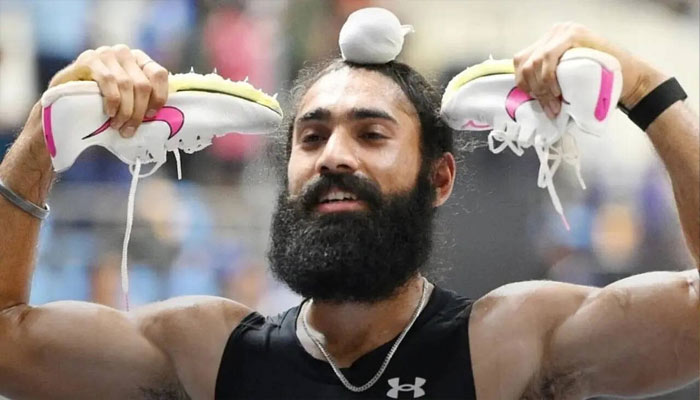
On a remarkable evening at the Birsa Munda Stadium in Ranchi, Indian sprinting witnessed a moment that could redefine its future.
Within the space of a few hours, the national men’s 100m record was broken twice — first by Punjab’s Gurindervir Singh and then by Jharkhand’s Animesh Kujur.
Gurindervir clocked 10.17 seconds in the heats before Kujur immediately bettered it with 10.15 in another race. Less than 24 hours later, Gurindervir returned in the final and stormed to 10.09 seconds, becoming the first Indian athlete to breach the 10.10-second barrier.
For Indian athletics, this was more than just a new record. It was a symbolic breakthrough in an event long dominated by athletes from the United States, the Caribbean and parts of West Africa.
Why India’s Sprint Revolution Matters
The men’s 100m is often viewed as the purest test of human speed. For decades, India remained far removed from the global sprinting conversation, with no athlete consistently approaching elite international timings.
Historically, sprinting dominance has been concentrated among athletes of West African ancestry, particularly from nations like Jamaica and the United States. Countries in East Africa, meanwhile, traditionally built reputations in long-distance running rather than explosive sprint events.
This global pattern led to a widespread belief that India lacked the genetic profile required for world-class sprinting. But recent performances are beginning to challenge that assumption.
The Science Behind Sprinting
Sports science has long linked sprint performance to fast-twitch muscle fibres and genes such as ACTN3, often referred to as the “speed gene.” Research has shown these traits are commonly found among elite sprinters.
However, Indian researchers have also found that the country’s genetic profile is far more diverse than simplistic stereotypes suggest. A study conducted by the Defence Institute of Physiology and Allied Sciences examined different Indian populations and concluded that many groups possessed sprint-related genetic markers similar to European populations.
India’s vast population further strengthens the argument that sprinting talent has always existed — the real issue has been identifying, training and nurturing it.
The Systemic Barrier
For decades, Indian athletics suffered from poor infrastructure, limited funding and a lack of pathways for young sprinters. Cricket dominated the sporting ecosystem, absorbing much of the country’s investment, public attention and grassroots ambition.
As a result, countless naturally gifted athletes never received elite coaching or opportunities to compete at high levels.
That landscape has gradually started changing. Olympic champion Neeraj Chopra’s success transformed perceptions around Indian athletics, proving that Indian athletes could become world-beaters with the right systems in place.
Now, Gurindervir Singh and Animesh Kujur are pushing Indian sprinting into territory that once seemed unreachable.
Why 10.09 Seconds Is Significant
Gurindervir’s 10.09 is still some distance away from the global elite, where Olympic finalists regularly run below 9.90 seconds. But focusing solely on that gap misses the bigger story.
The performance represents a psychological breakthrough for Indian athletics. Much like Roger Bannister’s historic sub-four-minute mile, it challenges a long-standing mental barrier. Once athletes believe something is possible, progress often accelerates rapidly.
Equally important is the emergence of competition. India no longer has just one fast sprinter — it has multiple athletes pushing each other forward. Rivalries are often the foundation of sporting revolutions, as seen in Jamaica’s sprint culture over the years.
A New Era For Indian Speed?
The rise of Gurindervir Singh and Animesh Kujur does not instantly make India a sprinting superpower. But it signals the beginning of a serious shift.
For young athletes across Punjab, Jharkhand and beyond, these performances send a powerful message: Indian sprinters can belong on the same track as the world’s best.
The real impact may only become visible years from now — through better funding, stronger grassroots programmes and a generation of young athletes inspired by what unfolded in Ranchi.
India’s sprinting story is still in its early chapters. But for the first time in a long time, the stopwatch is finally moving in the right direction.
Comments are closed.